
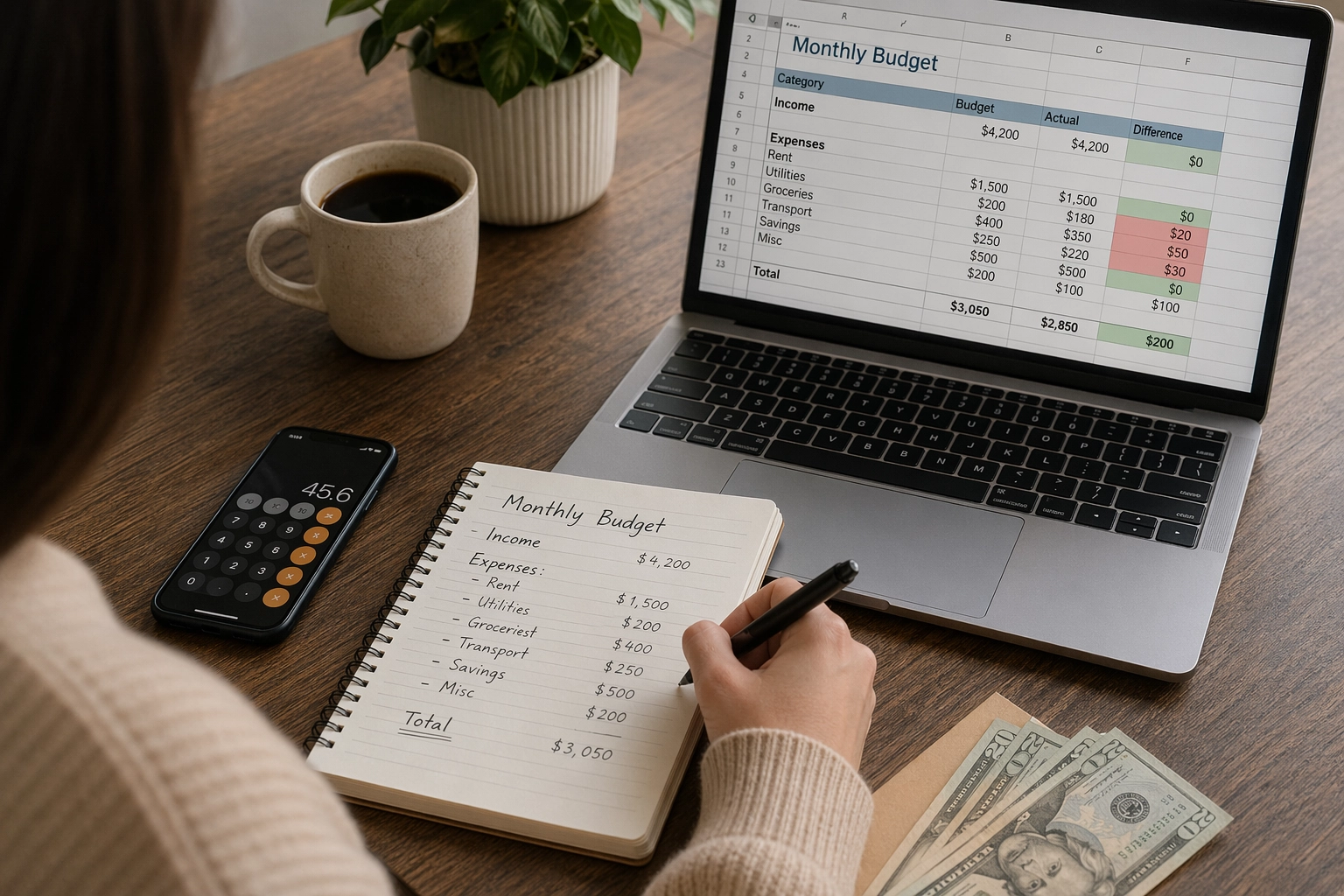
A budget shows where you want your money to go. Managing money well means keeping that plan working when bills fall on different dates, costs vary and everyday life changes.
Quick answer
To manage money better, build a repeatable payday-to-payday system: protect money for essential bills, set a realistic weekly spending amount, prepare for irregular costs, automate only what your cash flow can support and review the plan briefly each week. The aim is visibility and control—not a perfect spreadsheet.
This guide starts after you have a basic budget
If you have not yet compared your income with essential expenses, begin with our step-by-step guide to creating a monthly budget. It explains how to list income, essential costs, flexible spending and goals.
This article tackles the next challenge: turning that monthly plan into a system you can maintain. You will organise the timing of money, decide what is safe to spend between paydays and create short check-ins that help you spot problems early.
Think in dates as well as totals
You can have enough income across the month and still feel squeezed if a cluster of bills leaves before the next payday. A cash-flow plan adds dates to your budget so you can see when money arrives and when it needs to leave.
Map money from payday to payday
Choose a period that matches the way you are paid: weekly, fortnightly, every four weeks or monthly. Then map the journey of the money in this order.
Record actual dates
Note when wages, benefits or other reliable income reach the account. Add the due date of rent or mortgage payments, utilities, insurance, debt payments and other essentials.
Use realistic amounts
Check statements and bills instead of relying on memory. For variable costs, use a cautious recent average and update it when prices or circumstances change.
Keep scope consistent
If you are planning household finances, include the relevant household income and spending. If you are planning only your own money, do not mix in costs paid entirely by somebody else.
Leave breathing room
A small current-account buffer can reduce the risk of a payment failing because a bill is slightly higher or taken earlier than expected. Build it gradually if your budget allows.
A practical payday routine
Run this routine when reliable income arrives. Adapt the order if your priority payments are collected immediately.
Confirm what arrived
Check the amount against your payslip, benefit notice or expected income. If income varies, plan using what has actually arrived—not the most optimistic month.
Protect essential payments
Set aside the money needed for housing, energy, food, transport, childcare and other priority commitments before allocating money to lower-priority goals.
Fund the weeks ahead
Divide the flexible spending available by the number of weeks until the next payday. Adjust for a longer pay cycle, planned travel or an unusually expensive week.
Prepare for known costs
Move an affordable amount towards annual insurance, school expenses, celebrations, car maintenance or other predictable bills. These are not emergencies simply because they are not monthly.
Choose the next useful goal
Depending on your circumstances, that may be rebuilding a small buffer, covering an urgent need, reducing expensive debt or adding to savings. Avoid automating an amount that could leave essential payments short.
Organise accounts and bill dates
You do not need a complicated collection of bank accounts. The useful principle is to make money for different purposes easy to distinguish. Before opening or switching any account, check fees, access conditions, deposit protection and whether the provider suits your needs.
| Purpose | Simple setup | What to watch |
|---|---|---|
| Essential bills | Keep the required amount in the account from which direct debits are collected. | Payment dates, variable bills and charges for failed payments or overdrafts. |
| Everyday spending | Use a clear weekly amount for groceries, transport and flexible spending. | Card payments that are pending and subscriptions hidden among daily transactions. |
| Future costs | Use labelled savings pots or a simple written tracker. | Withdrawal restrictions and whether the money needs to be accessible soon. |
| Financial goals | Use a separate transfer after essentials are protected. | Do not treat a target as compulsory when income or essential costs change. |
If bill dates repeatedly create a squeeze, ask the provider whether the collection date can be changed. Confirm the new date in writing or in your account before relying on it, and make sure a change does not result in two payments falling unusually close together.
Manage weekly spending without tracking every penny
A weekly amount translates a monthly budget into a smaller decision window. It can cover flexible categories such as groceries, local transport, social spending and household extras, while essential direct debits remain protected separately.
Choose one tracking method
Use your banking app, a note on your phone, cash envelopes or our weekly spending planner. The best method is the one you will check consistently.
Check once midweek
Compare what remains with the days left. If you have overspent, adjust the remaining flexible choices rather than borrowing from money reserved for essential bills.
Expect imperfect weeks
A more expensive week does not make the whole plan a failure. Record what changed and decide whether the monthly plan, the weekly amount or the timing needs revising.
Review patterns, not blame
Look for repeated pressure points: an unrealistic grocery allowance, forgotten subscriptions, costly commuting days or plans that regularly fall just before payday.
Prepare for irregular and annual expenses
Review the previous 12 months of statements or your calendar for costs that are easy to overlook: annual insurance, school items, professional fees, Christmas, birthdays, home maintenance, car servicing and travel. Estimate when each cost is due and divide the target by the number of pay periods remaining.
The result is a planning amount, not a guarantee. If it is unaffordable, prioritise the most necessary costs, adjust the target or timing where possible and avoid taking money away from immediate essentials.
Sinking fund or emergency fund?
A sinking fund is for an expected cost with a purpose or approximate date. An emergency fund is for genuinely unexpected essential costs or a loss of income. The right order depends on your immediate obligations, debt costs and available income.
Coordinate money as a couple or household
A shared system should make responsibilities visible without removing anybody’s appropriate privacy or independence. Agree which costs are joint, who makes each payment and how changes will be discussed. An equal cash contribution is not always fair when incomes or caring responsibilities differ; a proportional or otherwise agreed arrangement may suit the household better.
- Use a short regular check-in with a clear agenda: bills, upcoming costs, one decision and one action each.
- Keep a shared list of important due dates and renewals.
- Agree a threshold above which joint purchases should be discussed.
- Give both partners suitable access to essential household information.
- Do not use budgeting as a reason to monitor, pressure or control another person’s spending.
If somebody controls your access to money, builds debt in your name or prevents you from meeting basic needs, that may be financial abuse rather than a budgeting disagreement. Seek confidential support from an appropriate domestic-abuse or advice service in your country when it is safe to do so.
Manage variable or irregular income
When income changes, separate confirmed money from hoped-for money. Start with essential costs and use a cautious baseline based on recent lower-income periods if that reflects your circumstances. Allocate additional income only after it arrives.
Rank expenses
Identify essentials, contractual commitments, flexible costs and goals. This creates a clear order for leaner months.
Build a holding buffer
If possible, keep part of a stronger month available for a lower-income month rather than immediately increasing ongoing commitments.
Set flexible transfers
Use a percentage or decide manually after income arrives if a fixed automated savings transfer could cause a shortfall.
Review tax obligations
If you are self-employed or have untaxed income, check current Revenue or HMRC rules and set aside money based on your actual obligations.
A monthly money-maintenance cycle
Money management becomes easier when reviews have different jobs. Keep the weekly check short and use a fuller monthly review to update the system.
Monthly checklist
Checklist selections stay in this browser page only and are not submitted to Lifestyle Hub Today.
Choose the pathway that matches your next step
Build and maintain everyday spending
Prepare for costs beyond this month
Use the free monthly budget planner Estimate a debt-payoff timeline
When money pressure needs more than a better routine
A spending system cannot solve an income that does not cover essential costs. Seek free, impartial help early if you are missing priority payments, relying on credit for essentials, receiving arrears notices or feeling unable to open bills.
Frequently asked questions
What is the difference between budgeting and managing money?
A budget sets out expected income, spending and goals. Money management is the ongoing system that keeps the budget usable: arranging bill dates, setting weekly limits, preparing for irregular costs and reviewing what changed.
How often should I check my finances?
A brief weekly check and a fuller monthly review suit many people, but the right frequency depends on pay dates, bill timing and how variable your income or costs are. Checking constantly can increase anxiety without improving decisions.
Should I use separate bank accounts for bills and spending?
Separate accounts or pots can make money easier to distinguish, but they are optional. Check fees, account conditions, access and deposit protection before changing your setup. A written tracker can work if you prefer one account.
What should I do if my income does not cover essentials?
Prioritise essential and high-consequence commitments, contact providers early and seek free, impartial support. In Ireland, MABS provides free confidential money and debt advice. In the UK, MoneyHelper and Citizens Advice provide free guidance.
How can couples manage money fairly?
Agree what is shared, how contributions will be decided and who handles each payment. Fair does not always mean equal cash amounts. Keep essential information accessible and do not use a budget to control another person.
Important information
This article provides general educational information, not personalised financial, investment, tax, debt or legal advice. Examples are illustrative and may not suit your circumstances. Rules, products and support differ between Ireland and the UK and can change, so check current information from the relevant official service or a suitably qualified professional.

About Lifestyle Hub Today
Lifestyle Hub Today publishes practical, approachable guides and tools designed to help readers make informed everyday choices. This guide was prepared and checked by the Lifestyle Hub Today editorial team using publicly available official guidance; it has not been reviewed by a financial adviser or other qualified professional.
Learn more about Lifestyle Hub Today