
Practical money guide for Ireland and the UK
If Christmas, a car service or an annual renewal keeps feeling like an emergency, the problem may not be your budget. It may be that one savings pot is trying to do two very different jobs.
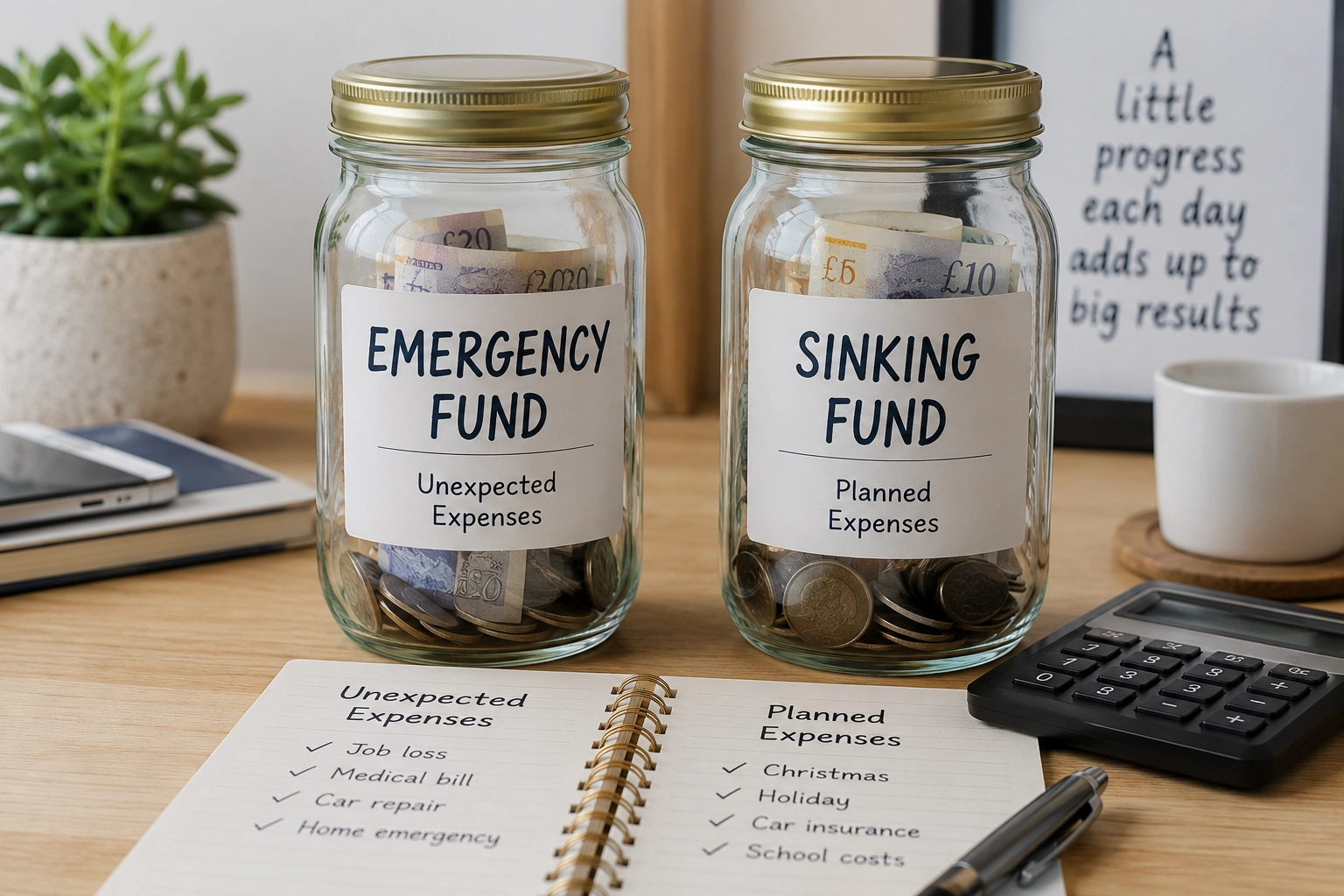
An emergency fund covers urgent, unexpected essential costs or a sudden loss of income. A sinking fund is money saved gradually for a known or reasonably predictable future expense. Most households benefit from having both.
A sudden income shock, an urgent boiler replacement or an essential car breakdown may call for emergency savings. Christmas, school costs, an annual insurance bill and a planned MOT or NCT belong in sinking funds because you know they are likely to arrive.
Separating the two helps protect your financial safety net, makes irregular expenses easier to manage and reduces the chance that a predictable bill ends up on a credit card. This guide explains how each fund works, which one to prioritise and how to start even when there is not much spare money.
The key difference is whether the cost is expected
The easiest test is not whether a cost is unpleasant or expensive. Ask whether you could reasonably have expected it.
Use a sinking fund when…
- You know what the money is for.
- The expense has a date or is likely to happen.
- You can estimate the amount in advance.
- You expect to spend and later refill the fund.
Use an emergency fund when…
- The need is urgent and essential.
- The cost or income loss was genuinely unexpected.
- Your normal budget cannot absorb it safely.
- Delaying payment could create serious difficulty.
A useful grey-area rule: if you know a cost will probably happen but not exactly when, it may still deserve a sinking fund. Tyres wear out, appliances eventually need replacing and homes require maintenance. You can build a realistic buffer for these costs without treating every expense as a crisis.
What is an emergency fund?
An emergency fund is accessible savings reserved for a genuine financial shock. Its purpose is to help you pay essential costs without immediately relying on a credit card, overdraft or expensive borrowing.
Examples of genuine emergencies
- A sudden loss or substantial reduction of household income.
- An urgent essential home repair, such as a failed heating system.
- An unexpected essential car repair when the vehicle is needed for work or caring responsibilities.
- Unavoidable urgent travel following a family emergency.
- An unexpected essential dental, medical or veterinary cost not adequately covered elsewhere.
How much should you keep in an emergency fund?
There is no single correct figure for every household. An achievable first milestone might be €500 or £500, followed by one month of essential outgoings. Over time, many households aim for three to six months of basic living costs, but the right target depends on your income security, dependants, insurance, health, housing and access to other support.
If your essential housing, food, utilities, transport and priority commitments total €1,800 or £1,800 a month, three months would be €5,400 or £5,400. Treat this as a gradual target rather than an amount you must find immediately.
What is a sinking fund?
A sinking fund is a named pot of money built for a specific future cost. You choose a target, work out when the money is likely to be needed and save a manageable amount regularly.
Unlike an emergency fund, a sinking fund is meant to be spent. Using it for its stated purpose means the plan worked.
Common sinking-fund categories
- Christmas, birthdays and family occasions.
- School clothing, books and supplies.
- Holidays, family visits and short breaks.
- Annual insurance, licences and subscriptions.
- MOT or NCT, servicing, tyres and car tax.
- Boiler servicing and planned home maintenance.
- Dental, optical or planned healthcare costs.
- Replacing technology, furniture or appliances.
For example, a €600 Christmas budget saved over six months requires €100 a month. A £720 annual insurance bill saved over twelve months requires £60 a month. These are calculation examples rather than estimates of typical costs; use your own renewal notices, quotes and recent spending.
For a full setup method, category ideas and a contribution calculator, read Sinking Funds Explained: UK & Ireland Beginner’s Guide.
Emergency fund vs sinking fund: side-by-side comparison
| Feature | Sinking fund | Emergency fund |
|---|---|---|
| Purpose | A particular planned or predictable cost | An urgent unexpected essential cost or income shock |
| Target | Based on the expected price and date | Based on the financial buffer your household needs |
| Use | Expected to be spent for its named purpose | Used only when a genuine emergency happens |
| Number of pots | Several categories can run at once | Usually one overall safety-net fund |
| Examples | Christmas, insurance renewal, NCT or MOT, car service | Income loss, urgent heating repair, unavoidable urgent travel |
| After using it | Reset the next target and refill if the cost will return | Rebuild the safety net when your budget allows |
Real-life examples for Ireland and the UK
Christmas shopping
Christmas arrives every year, so it is not an emergency. Estimate an affordable total and divide it by the paydays or months remaining. This belongs in a sinking fund.
Car servicing versus a breakdown
An MOT or NCT, routine service, car tax and known tyre replacement are predictable costs for a sinking fund. A sudden essential breakdown may qualify for emergency savings if it could not reasonably have been anticipated and your normal budget cannot cover it.
Home maintenance versus urgent damage
Boiler servicing, decorating and planned appliance replacement belong in sinking funds. An essential heating failure in winter or urgent damage that makes the home unsafe may be an emergency.
Loss of income
A job loss or sudden reduction in income is one of the clearest reasons for an emergency fund. The money can help cover essential outgoings while you adjust spending, seek support or secure new income.
A holiday or optional purchase
A holiday is a planned goal, not an emergency. If the sinking fund is not ready, reduce the cost, change the date or continue saving rather than taking money from the household safety net.
Should you build an emergency fund or sinking funds first?
For many households, the best answer is to build both in stages rather than fully completing one before beginning the other.
- Create a small emergency buffer.
Choose an achievable first milestone, even if it is much smaller than your eventual target. - Identify unavoidable costs due soon.
Start sinking funds for the next insurance renewal, car requirement, school expense or other priority cost. - Increase the emergency fund gradually.
Work towards one month of essential outgoings and then a larger buffer that fits your circumstances. - Review expensive debt and priority commitments.
Saving decisions should not leave housing, utilities, food or other priority payments at risk. If debt is difficult to manage, consider free independent debt guidance.
Example: if an annual motor insurance payment is due in four months, ignoring it while trying to complete a six-month emergency fund could create another borrowing problem. A small emergency buffer and a temporary sinking fund for the upcoming bill may be more realistic.
How to start both funds on a tight budget
Small, repeatable transfers are more useful than an ambitious plan that makes essentials difficult. Begin with the money available in your real budget.
- Review the previous twelve months. Look for irregular bills and expenses that repeatedly catch you out.
- Choose only two or three priorities. Too many tiny categories can make progress feel impossible.
- Set a small emergency milestone. The first goal might be €100/£100, then €250/£250 and then €500/£500.
- Calculate the next known expense. Divide the amount still needed by the paydays, weeks or months remaining.
- Automate only what is affordable. A standing order after payday can help, but leave enough for essential bills and everyday needs.
- Review once a month. Adjust contributions when income, prices or due dates change.
Even €5 or £5 a week creates a €260 or £260 buffer over a year, before interest. The habit and separation of the money matter as much as the first target.
Need to see how both funds fit around your weekly bills?
Use the free planner to organise income, spending and savings in pounds or euros.
Where should you keep emergency and sinking funds?
The money should be secure, easy to identify and available at the appropriate time. An emergency fund generally needs quick access. A sinking fund needs to be accessible by its expected spending date.
Practical options
- A separate easy-access savings account for the emergency fund.
- Named savings pots within a bank or credit-union app.
- One savings account with a reliable spreadsheet or written record dividing the balance between goals.
- Separate accounts for the largest or most important sinking funds.
Before choosing an account, check withdrawal rules, notice periods, fees, minimum balances, interest conditions and applicable deposit protection. Avoid placing money needed soon into investments whose value can fall or which may not be quickly accessible.
Deposit protection at the time of review: eligible Irish deposits are protected up to €100,000 per person per institution under the Deposit Guarantee Scheme. In the UK, the FSCS standard deposit-protection limit is £120,000 per eligible person per authorised firm. Check the official scheme and whether accounts share a banking licence before relying on a protection limit.
Common mistakes to avoid
Calling every difficult expense an emergency
A predictable bill may still be difficult to afford, but identifying it correctly lets you spread the cost through a sinking fund next time.
Keeping one unexplained savings balance
The funds can share an account, but you need a clear record of how much belongs to each purpose. Otherwise, a holiday or annual bill can quietly consume the emergency buffer.
Creating too many sinking funds
Start with the expenses most likely to destabilise your budget. Add more categories after the first system becomes easy to maintain.
Setting a target that ignores real life
A three-to-six-month emergency target is a long-term guide, not a test you have failed. Build it in stages and change the pace when essential costs rise.
Forgetting to refill the fund
After using either fund, decide when contributions can restart. Update a sinking-fund target when the next renewal price or due date becomes known.
Optional tools for organising your savings
Apps and ordinary savings accounts may be all you need. If you prefer a paper or cash-based system, these tools can help you label goals and track progress.
Affiliate disclosure: This section contains Amazon affiliate links. If you make a qualifying purchase, Lifestyle Hub Today may earn a small commission at no extra cost to you. Prices and availability can change.

Budget Planner & Organiser
Track income, bills, emergency savings and monthly goals in one place.
View on Amazon
Cash Envelope System
Separate cash-based spending and sinking-fund categories visibly.
View on Amazon

Expense Tracker Notebook
Record spending, savings contributions and progress towards targets.
View on AmazonFrequently asked questions
What is the difference between an emergency fund and a sinking fund?
An emergency fund covers urgent, unexpected essential expenses or income loss. A sinking fund is money saved gradually for a planned or reasonably predictable future expense.
Should I have both an emergency fund and sinking funds?
Most households benefit from both. The emergency fund protects against financial shocks, while sinking funds stop predictable bills and goals from using that safety net.
How much should be in an emergency fund?
Start with an achievable buffer and build gradually. Many households work towards three to six months of essential outgoings, but the right amount depends on income security, household responsibilities, insurance and personal circumstances.
Can emergency and sinking funds stay in the same account?
Yes, provided you keep an accurate record of how much belongs to each purpose. Separate accounts or named savings pots may make the division clearer and reduce accidental spending.
Should I pay debt or build savings first?
That depends on the debt cost, priority commitments, upcoming essential expenses and your wider circumstances. A small emergency buffer can reduce the need to borrow again, but high-cost or problem debt may need urgent attention. Consider free independent debt guidance for personalised help.
Editorial note and sources
This guide provides general educational information for readers in Ireland and the UK. It is not personalised financial advice. Examples are illustrative and should be replaced with your own costs, account terms and circumstances.
- CCPC: emergency-fund guidance
- MoneyHelper: emergency savings and essential outgoings
- Central Bank of Ireland: Deposit Guarantee Scheme
- FSCS: UK savings-protection checker
Written and reviewed by the Lifestyle Hub Today editorial team for clarity, usefulness and relevance to UK and Irish readers. Financial rules and protection limits can change, so confirm current details with the official provider.
Share this guide
Follow Lifestyle Hub Today
Find more realistic money, wellbeing and everyday-life ideas.
