
Free Weekly Budget Planner: Organise Your Money Each Week
Plan your income, bills, everyday spending and savings with a simple weekly system that works in pounds or euros.
Download the Free PlannerFree PDF printable • Suitable for UK and Irish households • No complicated spreadsheet needed
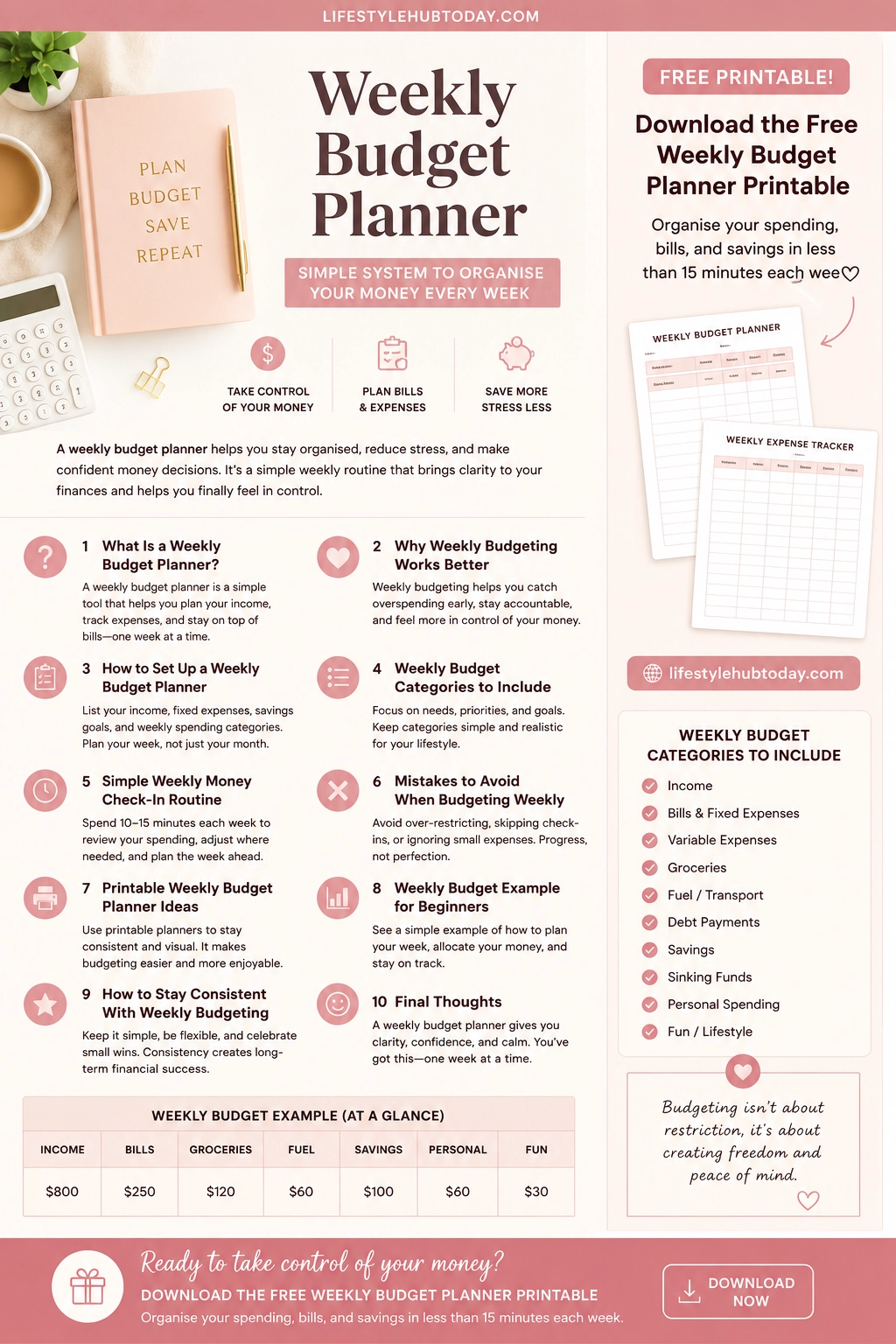
If money feels difficult to manage from one payday to the next, a weekly budget can make it feel far more manageable. Instead of waiting until the end of the month to discover that you have overspent, you give every week a clear, realistic plan.
This guide shows you how to turn monthly and annual bills into weekly amounts, choose practical spending categories and complete a quick weekly money check-in. The free printable can be used with either £ sterling or € euro.
Download the weekly budget planner
Use the printable to record your weekly income, planned spending, actual spending and savings. Print a fresh copy each week or keep it in a reusable folder.
Open the Free PDFWhat is a weekly budget planner?
A weekly budget planner is a simple tool for organising your income, bills, spending and savings seven days at a time. It gives you a smaller window in which to notice overspending and make adjustments.
Weekly planning can be particularly helpful if you are paid weekly or fortnightly, have variable income, find a monthly budget too abstract, or want tighter control over everyday costs such as groceries, transport and family activities.
What it helps you see
- Money available this week
- Bills due before the next check-in
- Realistic spending limits
- Amount available to save
Why it can work
- Problems are noticed sooner
- Large bills become smaller set-asides
- Progress is reviewed regularly
- The plan can change with real life
What to gather before you begin
Accurate figures make your planner more useful. Before filling it in, gather:
- Your latest payslip or income records
- Recent bank and card statements
- Upcoming bills and direct debits
- Annual expenses such as insurance, school costs or memberships
- Notes about any unusual costs expected this week
How to set up your weekly budget in five steps
1. Record the income available
Write down the income you genuinely expect during the week. Include wages, benefits, freelance payments or other reliable income without counting money that has not been confirmed.
2. Set aside this week's share of essential bills
List rent or mortgage costs, energy, phone, insurance, childcare, debt repayments and other commitments. If they are paid monthly or annually, convert them to a weekly figure using the method below.
3. Set limits for flexible spending
Choose realistic amounts for groceries, transport, personal spending and entertainment. Base them on recent transactions rather than an idealised “perfect” week.
4. Include savings and irregular expenses
Treat savings as a planned category, even when the amount is small. Use sinking funds to prepare gradually for costs that do not happen every week.
5. Compare your plan with what happened
At the end of the week, record actual spending. The difference between planned and actual figures tells you what to adjust next week.
How to convert bills into weekly amounts
A weekly budget still needs to include bills paid monthly, quarterly or annually. Converting them prevents the money being accidentally spent before the bill arrives.
Example: a £130 or €130 monthly energy bill is approximately £30 or €30 per week: 130 × 12 ÷ 52 = 30.
Weekly budget categories to include
Your categories should reflect your actual household. Start simply and add detail only when it helps you make a decision.
Essential costs
- Housing and utilities
- Groceries and household items
- Transport or fuel
- Childcare or school costs
- Minimum debt repayments
Goals and flexible costs
- Emergency savings
- Sinking funds
- Personal spending
- Entertainment
- Extra debt repayments
Example weekly budgets for the UK and Ireland
The figures below demonstrate how a planner might look; they are not recommended limits. Your housing, family circumstances, income and local costs will determine your real budget.
| Category | UK example | Ireland example |
|---|---|---|
| Groceries | £90 | €100 |
| Transport | £40 | €45 |
| Savings | £30 | €35 |
| Personal spending | £25 | €30 |
| Debt repayments | £50 | €55 |
| Entertainment | £20 | €25 |
How to budget when income is weekly or variable
If you are paid weekly
Start with the net pay arriving that week. Reserve the weekly share of monthly bills first, then allocate money to food, travel, savings and flexible spending. Keep the reserved bill money separate if that makes it easier not to spend.
If you are paid fortnightly
Divide your take-home pay by two to create a weekly amount, while checking that the first week leaves enough for any bills due before the next payday.
If your income changes
Build the core budget around your lowest reliable income. Separate essential costs from optional spending and use stronger weeks to create a buffer for quieter ones. Never rely on unconfirmed income to cover essential bills.
For costs that change throughout the year, use the guide to budgeting for irregular expenses and the free Predictable Expenses Planner.
Your 15-minute weekly money check-in
- Check current bank and card balances.
- Review transactions from the previous week.
- Compare actual spending with your plan.
- Check which bills are due next.
- Move money into savings or sinking funds.
- Adjust next week's limits without judging yourself.
Choose a consistent time, such as Sunday evening or the morning after payday. Consistency matters more than creating a flawless budget. You can also follow this weekly money reset routine.
Common weekly budgeting mistakes
- Forgetting annual costs: convert them into weekly set-asides.
- Using unrealistic limits: check recent statements before choosing figures.
- Making too many categories: combine small categories until more detail is genuinely useful.
- Leaving no breathing room: add a modest miscellaneous buffer where possible.
- Giving up after one difficult week: use the result to improve the next plan.
What if the budget does not balance?
If your essential outgoings are higher than your income, prioritise housing, energy, food and essential travel. Avoid relying on a printable alone if you are missing payments or dealing with unmanageable debt.
Free, impartial support is available from MoneyHelper and StepChange in the UK, and from MABS and the CCPC in Ireland.
Frequently asked questions
Is the weekly budget planner free?
Yes. The PDF planner is free to open, save and print for personal use.
Can I use the planner in pounds or euros?
Yes. The printable is currency-neutral, so you can enter amounts in pounds, euros or another currency.
Is weekly budgeting better than monthly budgeting?
Neither system is universally better. Weekly planning may be easier when you are paid weekly, want to monitor flexible spending closely or find a whole month difficult to manage.
How do I turn a monthly bill into a weekly amount?
Multiply the monthly bill by 12 and divide the result by 52. This gives a more accurate weekly amount than simply dividing by four.
How long should a weekly money check-in take?
A straightforward check-in can take about 10–15 minutes once your categories and regular bills are established.
Make a calm plan for the week ahead
Download the printable, add your real figures and focus on steady progress rather than perfection.
Download the Free PlannerImportant: This article provides general educational information and is not personalised financial advice. Figures are illustrative. Consider your own circumstances and seek qualified or impartial support when needed. Reviewed 22 September 2026.
Continue organising your money

About Lifestyle Hub Today
Lifestyle Hub Today shares calm, practical and realistic guidance to help you create a more organised, balanced and fulfilling life. Explore approachable resources covering money, wellbeing, personal growth, career, food, fitness, travel and everyday living.
Learn more about Lifestyle Hub Today →