
Fitness & Health: Beginner Workouts, Nutrition & Recovery
Start exercising with more confidence, build strength gradually, organise balanced meals and make recovery part of the plan with practical guides, interactive tools and realistic next steps.
Your Beginner-Friendly Guide to Movement, Food & Recovery
Fitness does not need to start with an extreme programme. A useful routine combines manageable movement, appropriate strength work, everyday food, enough recovery and gradual progression.
Beginner Workout Guides That Build Confidence
Start with manageable movement and learn a small number of useful exercises before worrying about advanced programmes or intense training schedules.
Follow a simple beginner plan combining strength, walking or cardio, mobility and genuine recovery days.
Start the beginner workout plan →Learn sets, repetitions, resistance and progressive overload with a realistic two-day full-body beginner programme.
Build strength safely →Follow five foundational poses in a gentle 10–15-minute sequence for movement, balance and breath awareness.
Try the beginner yoga sequence →Not sure where to begin?
The free Fitness Quiz gives you a starting direction based on your current level, main goal, available workout time, weekly training days and preferred setting.
Take the Free Fitness Quiz →Make Healthy Eating Easier to Organise
Healthy eating does not need to become another complicated project. Meal planning, familiar foods and flexible preparation can make balanced meals easier during busy weeks.
Use the beginner-friendly 3–2–1 system, shopping list guidance and a realistic preparation routine.
Plan your meals →Follow seven flexible days of breakfasts, lunches, dinners and snacks with a shopping list and one-hour prep plan.
View the 7-day plan →Build easy meals around naturally gluten-free ingredients and understand important coeliac food-safety considerations.
Explore gluten-free meals →Separate useful nutrition from exaggerated health claims and learn why dietary patterns matter more than one fashionable ingredient.
Superfood or Super Hype? →Browse adaptable everyday meal ideas for breakfasts, lunches and dinners.
Explore recipe ideas →Find more meal planning, healthy recipes and practical everyday cooking guidance.
Visit Food & Recipes →Recover Well Enough to Keep Moving
Recovery is part of training rather than time taken away from it. Ordinary food, fluids, sleep, lower-intensity movement and appropriate rest are the foundation.
Understand cooling down, soreness, hydration, food, stretching, sleep and when pain deserves more attention.
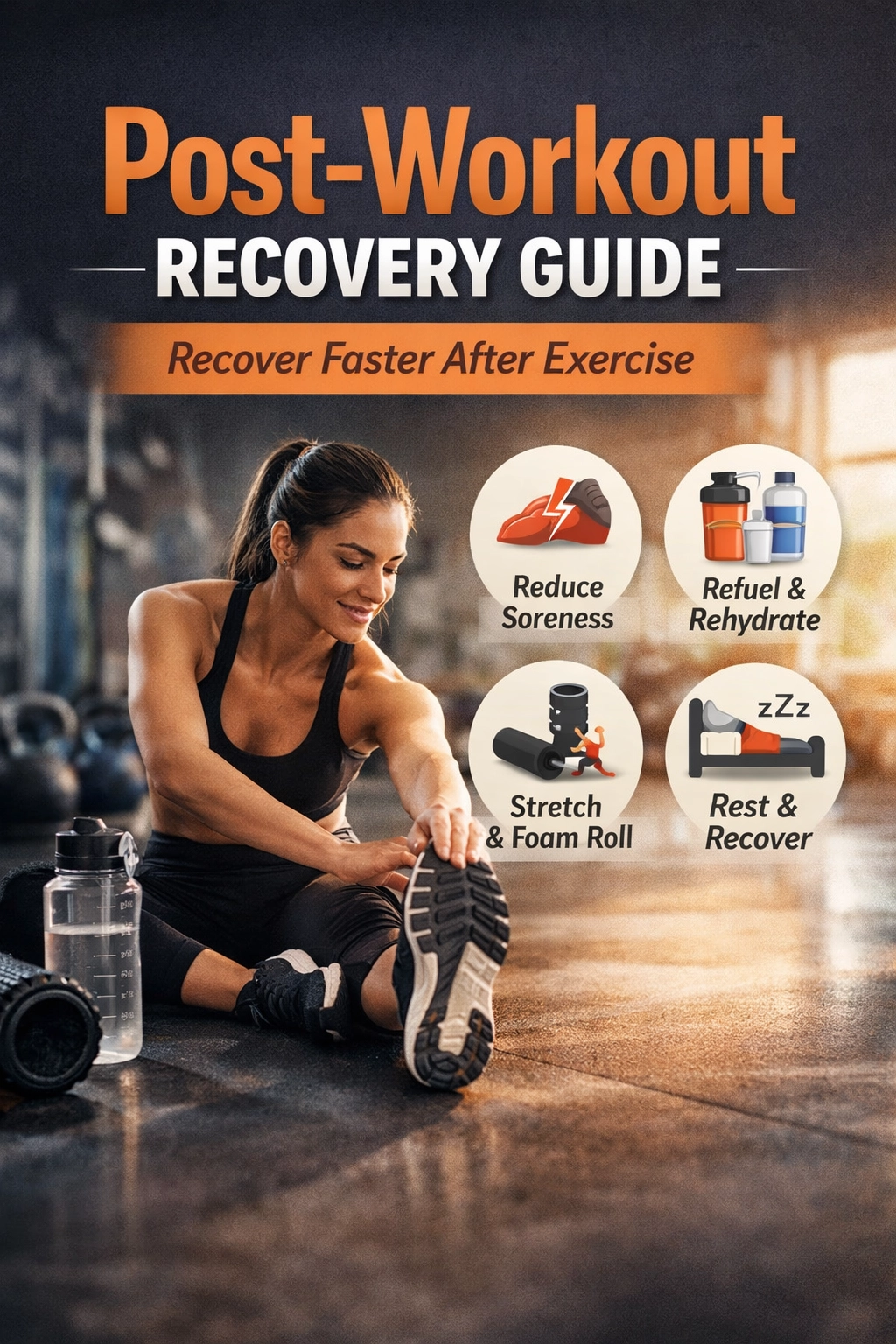
Read the recovery guide →Organise a repeatable routine around rest, food, hydration, sleep and your next training session.
Open the recovery planner →Use gentle movement on lighter days when a full workout is not appropriate.
Try the yoga sequence →Use Tools to Turn Information Into a Next Step
Calculators and quizzes can be useful starting points when their limitations are clear. Use them to organise decisions rather than treating an automated result as personalised healthcare advice.
Answer seven questions and get a starting plan shaped around your level, goal, available time, training days and preferred exercise setting.
Take the Fitness Quiz →Estimate resting energy, maintenance energy and an example macro split using the Mifflin–St Jeor equation.
Use the Calculator →Build a practical routine around cooling down, food, fluids, sleep and your next workout.
Plan Recovery →Turn nutrition ideas into meals you can realistically cook during the week.
Cook & Create →Vitamins & Supplements: Start With Food, Then Check the Details
Supplements are not required simply because you exercise. Where they are relevant, look at the ingredient, dose, total intake, health context and whether a genuine nutritional need exists.
Learn about common vitamins and minerals, supplement forms, label reading and safety considerations for Ireland and the UK.
Explore the supplements guide →Compare product types with clear limitations and UK/Ireland shopping information.
Compare products →Use a simple label check to identify overlapping vitamins and minerals before combining supplements.
Check supplement overlap →A Simple Four-Week Fitness & Health Starting Plan
Use this as a general framework rather than a prescription. Adapt the pace to your ability, health, schedule and recovery.
Start with walking, gentle mobility, beginner yoga or short manageable workouts.
Introduce a few bodyweight, band or light-resistance exercises.
Plan a few balanced meals and prepare ingredients that make busy days simpler.
Review sleep, rest, hydration and whether the overall training load feels sustainable.
Which Guide Should You Read First?
| Your goal | Best starting resource |
|---|---|
| I have not exercised for a while | Beginner Workout Plan |
| I want a plan matched to my schedule | Personalised Fitness Quiz |
| I want to become stronger | Beginner Strength Training Plan |
| I want gentler movement | Beginner Yoga Sequence |
| I need to organise food | Meal Planning & Batch Cooking |
| I want an example weekly menu | 7-Day Healthy Meal Plan |
| I am sore after exercise | Post-Workout Recovery Guide |
| I want an educational calorie estimate | Calorie & Macro Calculator |
Fitness & Health FAQs
How should a beginner start exercising?
Start with manageable movement and a small number of repeatable sessions. Walking, beginner strength exercises, cycling, swimming or yoga can all be useful depending on ability and preference.
How often should beginners exercise?
There is no single schedule for everyone. Start with a few manageable sessions across the week and build gradually while leaving appropriate recovery time between harder sessions.
Can I get fitter without joining a gym?
Yes. Walking, cycling, home strength exercises, resistance bands and yoga can all contribute to fitness without a gym membership.
Is strength training suitable for beginners?
Yes, when exercises and resistance are appropriate. Start light, concentrate on technique and progress gradually.
What should I eat after a workout?
For an ordinary session, a balanced meal or snack containing protein and carbohydrate can support normal recovery. Your wider daily eating pattern matters more than one perfect recovery food.
Do I need supplements to get fit?
No. Exercise, food, sleep, hydration and consistency are the foundations. Supplements may have a role in particular circumstances but are not required for general fitness.
Is the calorie and macro calculator personalised advice?
No. It provides an educational estimate based on a published equation and general activity multipliers. It does not assess medical history or prescribe an eating plan.
When should I get professional advice before exercising?
Seek appropriate professional guidance if you have a health condition, are recovering from injury or surgery, are pregnant or recently post-partum, have been inactive for a long period and are unsure what is suitable, or develop concerning symptoms during activity.
Lifestyle Hub Today creates practical lifestyle guides and free tools primarily for readers in Ireland and the UK. Fitness & Health content is designed to make movement, food planning and recovery easier to understand without presenting general information as personalised healthcare advice.
Learn more about Lifestyle Hub Today →Fitness & Health information is provided for general educational purposes and does not replace personalised medical, exercise or dietetic advice. · Privacy