
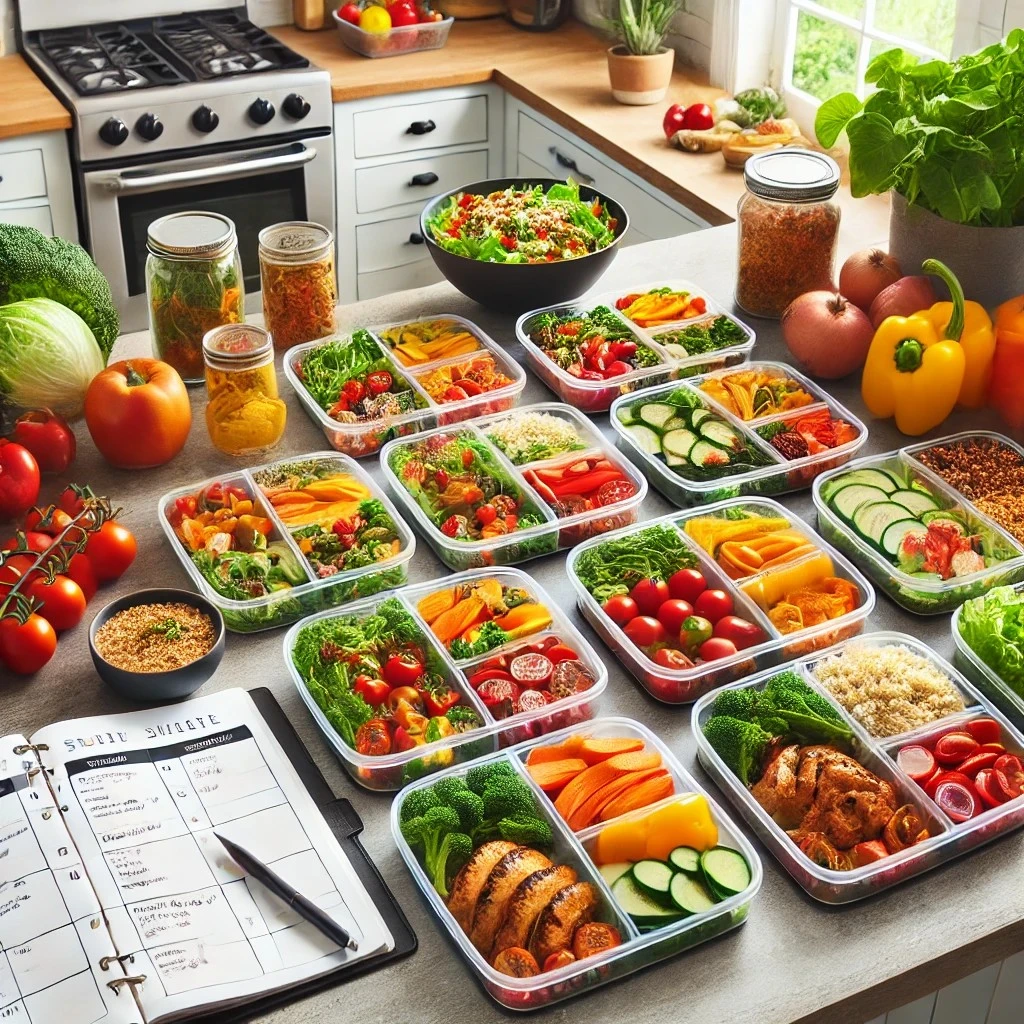
Meal Planning and Batch Cooking for Beginners
Create a flexible weekly meal plan, shop with purpose and prepare useful ingredients in advance—without spending your entire weekend in the kitchen.
The easiest way to start meal planning
Choose three main meals, prepare two versatile ingredients, portion everything safely and leave one flexible evening for leftovers or a quick dinner.
Meal planning decides what you will eat. Batch cooking prepares some or all of it ahead of time. Used together, they can reduce weekday decisions, make shopping more focused and help you use the food you buy.
You do not need seven different recipes or rows of identical containers. A realistic plan works with your schedule, appetite, budget and household. Start with one or two changes, notice what helps and build from there.
Your five-step beginner system
Check what you have
Look through the fridge, freezer and cupboards before choosing meals.
Choose familiar meals
Plan three to five meals you already enjoy and know how to prepare.
Write one shopping list
Group ingredients by produce, protein, dairy, cupboard and frozen foods.
Prepare the slowest items
Cook grains, roast vegetables, prepare a sauce and portion snacks first.
Store and label safely
Add the dish name and date, then refrigerate or freeze suitable portions.
Review next week
Keep what worked, change what did not and avoid aiming for perfection.
What are meal planning and batch cooking?
Meal planning
Meal planning means deciding in advance what you are likely to eat over a set period—usually several days or one week. It can include breakfasts, lunches, dinners and snacks, but it does not have to cover every meal.
Batch cooking
Batch cooking means preparing a larger quantity of a complete meal or ingredient and storing portions for later. You might cook two dinners at once, make a large soup or prepare several servings of rice.
Meal preparation
Meal preparation is the wider process. It can include washing vegetables, mixing a dressing, portioning snacks or chopping ingredients without cooking complete meals.
The best approach is usually a mixture. Prepare enough to make busy days easier, while leaving some meals fresh and flexible. For a more structured menu, use our guide to creating a seven-day nutritious meal plan.
Three beginner-friendly ways to prepare ahead
1. Complete meals
Cook and portion finished dishes such as soup, chilli, curry, stew or pasta sauce. This is useful when you need lunches to take to work or dinners that only require reheating.
Best for: very busy weekdays and predictable schedules.
2. Mix-and-match ingredients
Prepare individual components such as grains, roasted vegetables, cooked protein and a dressing. Combine them differently in bowls, wraps, salads and quick dinners.
Best for: variety, families and changing appetites.
3. Double-and-freeze
Make twice the amount of a meal you are already cooking. Eat one portion now and freeze the rest for another week. This is often the easiest way to begin.
Best for: building a freezer supply gradually.
How to create a weekly meal plan
1. Look at your calendar
Mark the evenings when you will be late, eating elsewhere or need something especially quick. Plan around real life rather than an ideal week.
2. Shop from your kitchen first
Note fresh ingredients that need to be used, open packets in the cupboard and frozen portions you already have. These become the starting point for your menu.
3. Choose meals with overlapping ingredients
If you buy peppers, spinach, yoghurt or roast chicken, plan more than one sensible use for them. Overlap makes shopping simpler without forcing you to eat the same dinner repeatedly.
4. Add one quick backup meal
Keep ingredients for an easy option such as eggs on toast, vegetable pasta, soup, a filled wrap or a freezer portion. A backup prevents the plan from collapsing when the day changes.
5. Decide what actually needs preparing
Circle the tasks that will save meaningful time: cooking grains, chopping sturdy vegetables, making one sauce or preparing tomorrow's lunch. Leave delicate ingredients until closer to serving.
A beginner batch-cooking shopping list
Use this as a flexible framework rather than a list of items you must buy. Check your kitchen first and choose only what supports your planned meals.
Vegetables and fruit
- Onions and garlic
- Peppers and carrots
- Broccoli or cauliflower
- Leafy greens
- Seasonal fruit
Protein choices
- Eggs
- Chicken, fish or tofu
- Beans, chickpeas or lentils
- Plain yoghurt
- Nuts or seeds
Versatile carbohydrates
- Rice or another grain
- Pasta
- Potatoes or sweet potatoes
- Wholemeal bread or wraps
- Oats
Flavour builders
- Tinned tomatoes
- Stock
- Herbs and spices
- Lemon or lime
- Olive or rapeseed oil
Useful freezer foods
- Frozen vegetables
- Frozen berries
- Portioned bread
- Prepared leftovers
- A quick backup meal
Storage supplies
- Shallow airtight containers
- Freezer-safe containers or bags
- Reusable labels
- Permanent marker
- Small dressing containers
A realistic 90-minute preparation session
Work from the longest cooking time to the shortest. You can stop earlier if you have prepared enough to make the week easier.
-
0–10 minutes: set up
Clear the worktop, wash your hands, gather containers and preheat the oven.
-
10–25 minutes: start the slow items
Begin rice or another grain and place a tray of vegetables in the oven.
-
25–45 minutes: prepare protein or a main dish
Cook a suitable protein, soup, curry, chilli or tomato-based sauce.
-
45–60 minutes: prepare cold ingredients
Wash sturdy produce, mix a dressing and portion simple snacks.
-
60–75 minutes: cool and portion
Divide food into shallow containers so it can cool more quickly.
-
75–90 minutes: label and tidy
Add names and dates, refrigerate or freeze safely, then reset the kitchen.
Foods that batch-cook well
Good choices for batch cooking
- Soups, stews, chilli and curry
- Tomato-based pasta sauces
- Beans, chickpeas and lentils
- Cooked grains, handled and stored safely
- Roasted root vegetables
- Meatballs, fishcakes or bean burgers
- Muffins, pancakes and porridge portions
Often better prepared fresh
- Delicate dressed salad leaves
- Cut avocado
- Crispy toppings
- Fresh herbs used as a garnish
- Foods with textures your household dislikes after reheating
Prepare the supporting ingredients and add these items just before serving.
Store, freeze and reheat food safely
Good storage is part of successful batch cooking. Always follow the instructions on food labels and use-by dates, particularly for chilled ingredients and ready-to-eat foods.
- Cool cooked food and place it in the fridge or freezer within one to two hours. Dividing a large batch into shallow portions helps it cool faster.
- Keep your fridge at the recommended safe temperature and avoid overfilling it, so cold air can circulate.
- Label containers with the dish and preparation date. Eat refrigerated leftovers within the period advised by the Food Standards Agency or freeze them.
- Defrost food safely, ideally in the fridge, and follow the original product or recipe instructions.
- Reheat leftovers until they are steaming hot throughout and only reheat them once.
- Take extra care with cooked rice: cool it quickly, refrigerate it promptly and follow current official guidance for storage and reheating.
Read the Food Standards Agency’s home food-safety guidance for current advice on chilling, freezing, defrosting and reheating.
Allergies and dietary requirements: check every ingredient label, prevent cross-contamination and clearly identify meals prepared for someone with an allergy or intolerance.
How meal planning can save money and reduce waste
Meal planning cannot guarantee a particular saving, but it can make spending more intentional. You are more likely to know what you need, use ingredients in more than one meal and notice leftovers before they are forgotten.
Buy for a purpose
Give each perishable ingredient at least one planned use before adding it to your basket.
Compare unit prices
A larger pack is useful only when you can safely use, portion or freeze it.
Plan a use-it-up meal
Turn suitable remaining vegetables, grains and proteins into a soup, omelette, bowl or wrap.
WRAP estimates that UK households generated six million tonnes of food waste in 2022, including 4.4 million tonnes that could have been eaten. See the WRAP household food and drink waste report.
Adapt the plan to your household and goals
Cooking for one
Freeze individual portions, alternate prepared meals and choose ingredients that can be used in several ways.
Couples and families
Keep sauces, toppings and side dishes separate so each person can assemble a meal that suits them.
Vegetarian meals
Build meals around beans, lentils, chickpeas, tofu, eggs or other suitable protein choices.
Gluten-free needs
Check every label and prevent cross-contamination. Explore our healthy gluten-free meal ideas.
Active lifestyles
Adjust portions and meal composition to your individual requirements. Our calorie and macro calculator can offer a general starting point.
Low-energy weeks
Use frozen vegetables, tinned pulses, microwaveable grains and simple assembly meals to reduce preparation.
Seven common meal-prep mistakes
- Planning every meal: leave space for leftovers, invitations and changes of mind.
- Starting with too many recipes: use familiar meals until the routine feels easy.
- Preparing food you do not enjoy reheated: test one extra portion before making a large batch.
- Buying in bulk automatically: compare prices and consider whether you have enough safe storage space.
- Forgetting texture: keep dressings, herbs and crunchy toppings separate.
- Not labelling containers: add the meal name and date before refrigerating or freezing.
- Treating the plan as a rule: move meals around when your schedule or appetite changes.
Meal planning and batch cooking FAQs
How do I start meal planning as a beginner?
Start with three familiar dinners, check the food you already have and write one organised shopping list. Prepare only the ingredients that will make the busiest days easier.
What is the difference between meal planning and batch cooking?
Meal planning is deciding what you will eat in advance. Batch cooking is preparing a larger amount of food at once and storing portions for later. You can meal-plan without batch cooking, although the two methods work well together.
Do I need to cook every meal in advance?
No. Many beginners find it easier to prepare versatile ingredients, such as roasted vegetables, a grain and one sauce, and then assemble different meals during the week.
How many meals should I prepare at once?
Begin by doubling one recipe or preparing two to three days of useful components. Increase the amount only when you know you enjoy the meals after storage and reheating.
Does meal planning save money?
It can help by reducing unplanned purchases, unnecessary takeaway meals and unused ingredients. The result depends on what you buy, what you already own and how consistently you use the plan.
What equipment do I need for batch cooking?
A chopping board, suitable knives, baking trays, saucepans and shallow airtight containers are enough for most beginners. Freezer-safe bags or containers and clear labels are also useful.
How long can batch-cooked food stay in the fridge?
Safe storage time varies by food. Follow use-by dates, recipe instructions and current Food Standards Agency advice. Cool food promptly, label it and freeze portions you will not use within the recommended period.
Useful next steps from Lifestyle Hub Today
Sources and review notes
Lifestyle Hub Today reviewed current official guidance while updating this article. Guidance and individual needs can change, so check labels and the latest advice when storing or reheating food.
Practical ideas for real life
Lifestyle Hub Today helps readers build healthier, happier and more balanced lives through practical, accessible and encouraging lifestyle content.
Our guides cover food, wellbeing, fitness, personal growth, family, home, money, travel and everyday inspiration. We focus on realistic actions you can adapt to your own circumstances—without perfection or unnecessary pressure.
Share this beginner’s meal-planning guide
Help someone make weekday meals simpler, more flexible and less wasteful.
Follow Lifestyle Hub Today
Your daily dose of inspiration: trends, tips and timeless living.
This article provides general food-planning information and is not a substitute for personalised medical, nutritional or allergy advice.
