
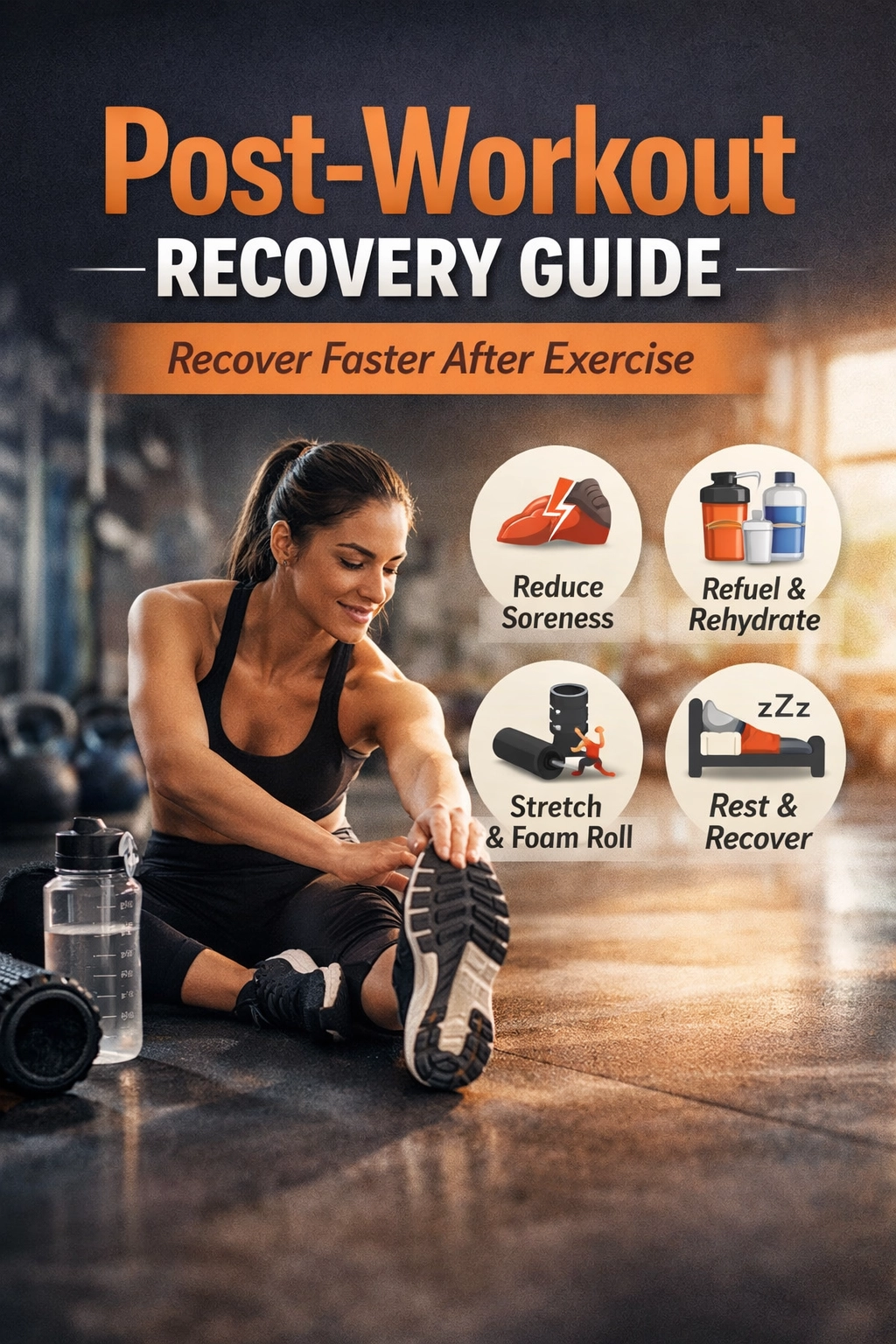
Practical fitness and recovery guide
Recovery after exercise helps you return to normal activity and prepare for a future session. What you need depends on the workout, your usual activity level, sleep, food and fluid intake, health and any pain or injury.
The quick answer
What should you do after a workout?
Finish at a gentler pace, drink according to thirst and conditions, eat an ordinary balanced meal or snack when convenient, and allow suitable rest before repeating demanding exercise. Gentle stretching or light movement may feel helpful, but neither guarantees faster recovery or prevents soreness or injury.
There is no perfect routine and no universal recovery timetable. A short walk, a meal containing protein and carbohydrate, fluids, sleep and a less demanding next day may be enough after an ordinary session. Longer, hotter or unusually strenuous exercise can require a more individual approach.
Exercise safety
Stop or reduce exercise if pain is sharp, worsening or affects normal movement. Seek medical advice for severe or increasing pain, marked swelling or bruising, numbness, loss of movement, inability to bear weight, or symptoms that are not improving.
Call 112 (Ireland, the UK and throughout the EU) or 999 (Ireland and the UK) for chest pain, fainting, severe breathing difficulty or another medical emergency. Dark urine with severe muscle pain or weakness after strenuous exercise also needs prompt medical assessment.
If you are pregnant, returning after illness or surgery, living with a health condition or taking medication that affects fluid balance, ask an appropriate healthcare professional whether you need individual advice.
Start with the basics
What post-workout recovery really means
Exercise temporarily challenges muscles, energy stores and the cardiovascular system. Recovery is the period in which fatigue settles and the body adapts to the activity. The process is influenced by training experience, the type and intensity of exercise, food, fluids, sleep, stress, age and health.
Feeling tired or mildly sore after unfamiliar activity can be normal. It is not necessary to feel sore for a workout to be useful, and more soreness does not automatically mean more progress. A sensible recovery approach helps you notice how you respond and decide whether the next session should be similar, easier or delayed.
Reduce intensity gradually
Allow breathing and effort to settle instead of ending a demanding session abruptly.
Return to everyday needs
Use ordinary meals, fluids and rest as the foundation rather than chasing a perfect product or routine.
Respond to symptoms
Adjust the next session when soreness, fatigue or pain is more than you expected.
New to planned exercise? Begin with the beginner workout guide and build duration or intensity gradually.
Step one
Cool down at a comfortable pace
A cool-down is a gradual transition from harder exercise to ordinary movement. After running, cycling or another sustained activity, you might walk or continue at low intensity for several minutes until breathing feels more comfortable.
A fixed five-minute routine is not compulsory and it does not guarantee that you will avoid soreness or injury. Its practical purpose is to help the session finish gradually and give you time to notice dizziness, pain or unusual breathlessness.
A simple transition
- Reduce the pace or resistance gradually.
- Keep moving gently while your breathing settles.
- Take slow, comfortable breaths without forcing them.
- Sit or lie down safely if you feel faint, and seek help if symptoms are severe or do not settle.
Comfort and mobility
Stretching can feel useful, but it is not a soreness cure
Gentle stretching after exercise may help you relax, maintain flexibility or move through a comfortable range. However, research reviews have not found a clinically important reduction in delayed-onset muscle soreness from stretching before or after exercise.
Stretch slowly without bouncing. Aim for a mild pulling sensation rather than pain, and stop if a position causes sharp pain, tingling, numbness or dizziness. The NHS advises adapting stretches if you are pregnant or have an injury or medical condition.
For a slower mobility session, use the beginner yoga sequence only when its movements feel suitable for you.
Everyday nourishment
Eat a balanced meal or snack when it suits you
After an ordinary workout, food does not need to be complicated. A meal or snack containing a source of protein and carbohydrate can contribute to normal recovery, while your wider eating pattern matters more than one perfect post-workout food.
There is no universal requirement to consume exactly 20–30 grams of protein within 60 minutes. Appropriate amounts and timing depend on body size, the activity, other meals, dietary needs and individual goals.
| Protein source | Carbohydrate source | Simple example |
|---|---|---|
| Eggs, yoghurt or fortified alternative | Wholemeal toast, oats or fruit | Yoghurt with oats and fruit |
| Chicken, fish, beans, lentils or tofu | Potatoes, rice, pasta or another grain | Bean and rice bowl with vegetables |
| Milk or fortified alternative | Fruit and oats | A simple smoothie alongside a normal meal |
Plan flexible everyday meals with the meal-planning and batch-cooking guide. If you have allergies, a medical condition, an eating disorder or a prescribed diet, seek individual advice from an appropriate professional.
Replace fluids sensibly
Let the workout and conditions guide hydration
Fluid needs vary with exercise duration and intensity, temperature, body size, sweat loss and health. A fixed quantity such as 500–750 ml is not appropriate for every person or session.
- Drink regularly through the day and respond to thirst.
- Drink more when exercise, heat or heavy sweating increases fluid loss.
- Pale urine can be a practical general sign that you are drinking enough, although some medicines and health conditions can affect urine colour and fluid needs.
- Electrolyte products are not automatically necessary after an ordinary workout. Longer, very intense or hot-weather sessions may require a more specific plan.
Persistent dizziness, unusually dark urine, reduced urination, confusion or a fast heart rate can be signs of dehydration that need appropriate medical advice. See the NHS dehydration guidance.
Rest and routine
Sleep supports wellbeing and readiness to exercise
Sleep forms part of recovery, but one poor night does not mean that all progress is lost. Focus on a realistic routine: keep wake and sleep times broadly consistent when possible, allow time to wind down and notice whether late exercise affects your ability to settle.
Sleep needs vary. If sleep problems persist, affect daily functioning or are accompanied by significant daytime sleepiness, speak to a GP or another appropriate healthcare professional. The realistic sleep guide offers a practical starting point.
The next day
Choose rest or gentle activity according to how you feel
Active recovery means low-effort movement on a lighter day, such as an easy walk, relaxed cycling or comfortable mobility work. Some people find it pleasant, but it should not be described as a guaranteed way to speed healing.
Complete rest may be more suitable when you are unwell, unusually fatigued, injured or experiencing pain that worsens with movement. Avoid training the same area hard simply because a timetable says it is time.
Rest
Useful when you feel unwell, unusually fatigued or when movement worsens symptoms.
Gentle movement
An option when walking or easy mobility feels comfortable and does not increase symptoms.
Another workout
Consider it when normal movement feels comfortable and you feel ready, while varying intensity and muscle groups where appropriate.
Optional, not essential
Foam rolling may offer temporary comfort
Some people use a foam roller because it makes an area feel less stiff or improves movement temporarily. It is optional and should not be painful.
- Use slow, controlled pressure on muscle rather than directly over a joint or bone.
- Avoid injured, bruised, swollen or numb areas.
- Stop if pain is sharp, worsening or causes tingling.
- Ask a physiotherapist for individual guidance if you have an injury or circulation concern.
Use with care
Heat and cold are not universal recovery rules
Warmth may feel relaxing for ordinary stiffness, while a wrapped cold pack is sometimes used after an acute sprain or strain. Neither method is necessary after every workout, and suitability depends on whether you are dealing with ordinary post-exercise sensations or a possible injury.
Never place ice directly on the skin. The NHS advises avoiding heat and massage during the first couple of days after a sprain or strain and recommends medical help when pain, swelling or loss of function is severe or worsening.
Food first
Most everyday recovery routines do not need supplements
Protein powders, creatine, magnesium and omega-3 products are not interchangeable “recovery supplements”. They have different evidence, purposes, doses and safety considerations. Do not build a general supplement stack simply because you exercised.
A product may be convenient in a particular situation, but it cannot replace suitable training, ordinary food, fluids, sleep or medical assessment. Check the label and total intake from all products, and ask a pharmacist, GP or registered dietitian before use if you take medication, are pregnant or breastfeeding, are preparing for surgery or have a diagnosed condition.
Read the Vitamins and Supplements Guide for Ireland and the UK before comparing products.
No fixed timetable
How long should recovery take?
Recovery can take longer after a new, demanding or high-volume session and may feel different between muscle groups. The familiar 24- or 48-hour rule is not a diagnosis and soreness lasting beyond 72 hours does not, by itself, prove overtraining.
| What you notice | Sensible response |
|---|---|
| Mild, general soreness that gradually settles | Choose normal daily movement, rest or a lighter session according to comfort. |
| Fatigue or soreness that is stronger than expected | Reduce intensity or delay demanding exercise and review how quickly training was increased. |
| Sharp, localised or worsening pain | Stop the aggravating activity and seek appropriate medical or physiotherapy advice. |
| Severe swelling, inability to bear weight, numbness or loss of movement | Seek urgent medical advice. |
A flexible framework
A realistic beginner recovery routine
- Finish gradually: reduce your pace until breathing and effort feel more comfortable.
- Check how you feel: notice dizziness, unusual breathlessness and sharp or worsening pain.
- Drink sensibly: respond to thirst, exercise conditions and signs of dehydration.
- Eat normally: choose a balanced meal or snack when convenient rather than racing an arbitrary deadline.
- Stretch only if it suits you: use a comfortable range and do not expect it to prevent soreness.
- Protect sleep: return to a manageable wind-down and sleep routine.
- Adjust the next session: use rest or lighter movement if fatigue or soreness is greater than expected.
For a realistic starting structure, try the free personalised fitness quiz. Its result is a general starting point, not individual medical or exercise prescription.
Continue learning
Related Lifestyle Hub Today guides
Questions answered
Post-workout recovery FAQs
How can I support recovery after a workout?
Finish gradually, drink according to thirst and conditions, eat a balanced meal or snack when convenient, protect sleep and adjust the next session according to fatigue, soreness and pain. No single routine guarantees faster recovery.
Does stretching stop muscle soreness?
Stretching may feel comfortable and support flexibility, but research does not show a clinically important reduction in delayed-onset muscle soreness. Stretch gently and stop if it causes pain, tingling or numbness.
Do I need protein immediately after exercise?
No universal one-hour deadline applies to everyone. A balanced meal or snack containing protein and carbohydrate can support normal recovery, while your wider eating pattern, health and individual needs also matter.
Do I need an electrolyte drink?
Not automatically. Water and ordinary food are often sufficient after routine activity. Longer, very intense or hot-weather exercise may require a more individual hydration plan.
How long should muscle soreness last?
It varies with the activity and the individual. Mild soreness should gradually settle. Sharp or worsening pain, marked swelling, numbness, loss of movement or inability to bear weight needs appropriate medical advice.
Is soreness proof that a workout worked?
No. Soreness can follow unfamiliar exercise, but it is not required for progress and more soreness does not automatically mean a more effective session.
Evidence and review notes
Sources used for this guide
Lifestyle Hub Today reviewed current public-health guidance and published research when updating this article. Evidence and individual needs vary, so this guide avoids promising that a particular routine will prevent injury or accelerate recovery.
- HSE: How to increase your activity levels
- NHS: Exercise guidance
- NHS: How to stretch after exercising
- NHS: Dehydration
- NHS: Sprains and strains
- Herbert et al.: Stretching to prevent or reduce muscle soreness after exercise
Sources checked 2 September 2026. Review by 2 September 2027, or sooner if official guidance changes.
Health information note
This page provides general information and is not a diagnosis, treatment plan or substitute for advice from a qualified healthcare professional. Individual needs vary. Seek appropriate medical advice for persistent, severe, worsening or concerning symptoms, and use emergency services for urgent symptoms.

About Lifestyle Hub Today
Practical inspiration for everyday life
Lifestyle Hub Today shares practical, accessible guides and tools across fitness, wellbeing, food, self-care, personal growth, money, career, family, home, fashion and travel. Our content focuses on realistic actions readers can adapt to their own circumstances.
Learn more about us