
Beginner Yoga Sequence: 5 Easy Poses for Your First Flow
Start yoga gently with a simple 10–15-minute routine designed to help complete beginners learn foundational poses, practise mindful breathing and build confidence at home.
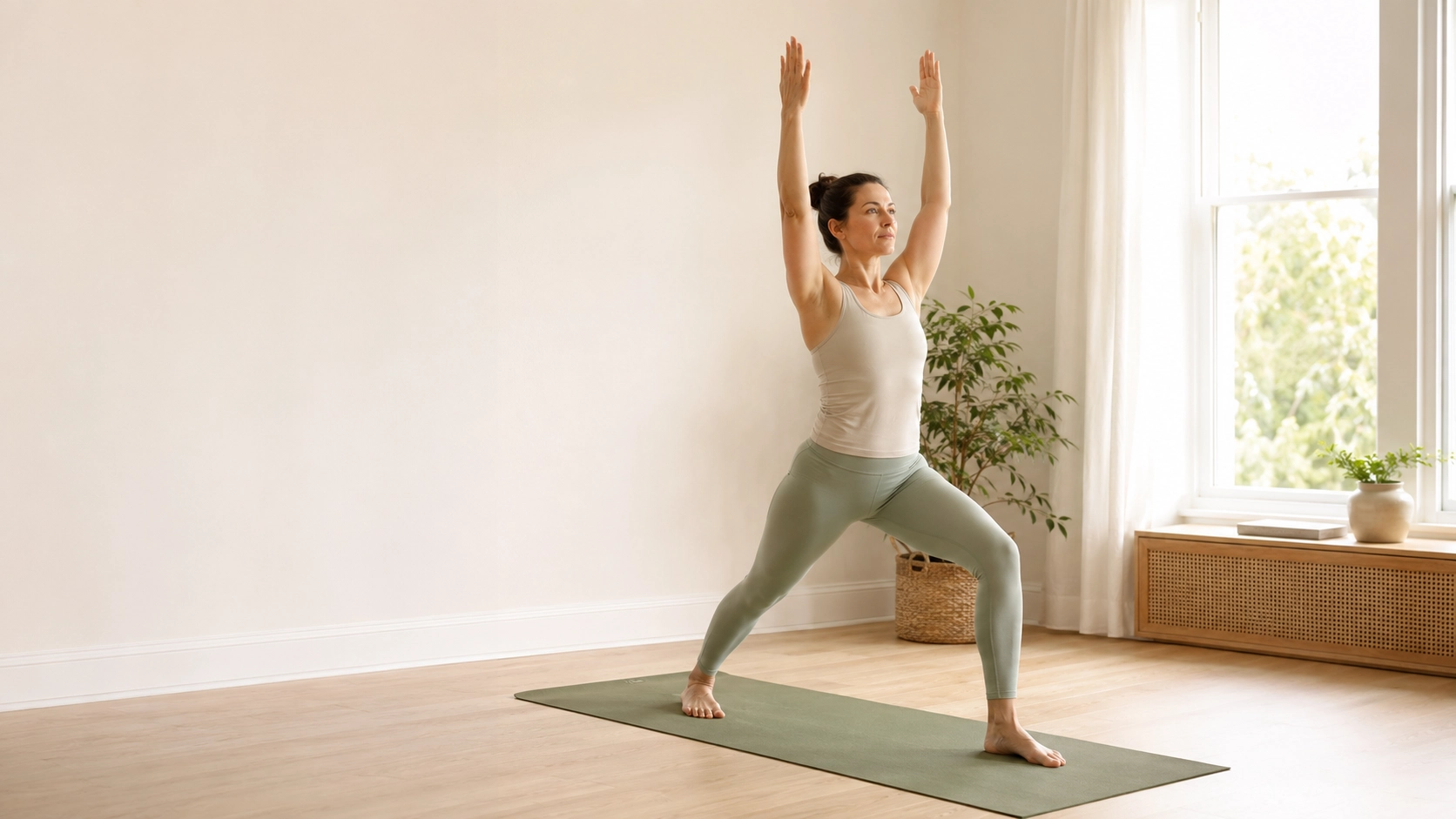
A Gentle Place to Begin
You do not need to be flexible, experienced or naturally balanced to begin yoga. The best starting point is a short routine that lets you learn how each movement feels without rushing from one pose to the next.
This beginner yoga sequence combines five foundational poses to encourage comfortable movement, posture awareness and slower breathing. Complete it in approximately 10–15 minutes, pause whenever you need to and treat every modification as part of the practice—not as a lesser version of it.
If you are beginning a wider exercise routine, read our beginner’s guide to starting your workout journey for practical advice on building consistency.
Your Beginner Yoga Sequence at a Glance
Follow the poses from left to right on larger screens or from top to bottom on mobile. Complete Warrior I on both sides before finishing in Child’s Pose.
The sequence moves from Mountain Pose to Cat–Cow, Downward-Facing Dog, Warrior I on both sides and Child’s Pose.
Five Easy Yoga Poses for Beginners
Move slowly through each pose and use the suggested modifications whenever they make your breathing or alignment feel more comfortable. For this routine, one slow breath means one unforced inhale followed by one unforced exhale.
Mountain Pose (Tadasana)
A steady standing pose for posture, balance and breath awareness.
- Stand near the front of your mat with your feet together or comfortably hip-width apart.
- Spread your toes and distribute your weight evenly across both feet.
- Keep your knees soft rather than locked. Gently lengthen your spine and let your shoulders relax away from your ears.
- Allow your arms to rest beside your body with your palms facing forward or towards your thighs.
- Look ahead and take five slow, comfortable breaths.
Stand with your feet slightly wider or practise beside a wall or sturdy chair if you would like extra balance support.
Common mistakeAvoid lifting your chest so strongly that your lower back arches. Think about growing taller while keeping your ribs relaxed.
Cat–Cow Pose (Marjaryasana–Bitilasana)
A slow, breath-led movement that gently mobilises the spine.
- From Mountain Pose, bend your knees, bring your hands to the mat and carefully lower onto your hands and knees.
- Place your wrists roughly beneath your shoulders and your knees beneath your hips.
- As you inhale, allow your abdomen to soften, gently lift your chest and tailbone and look slightly forward for Cow Pose.
- As you exhale, press through your hands, round your back and allow your head and tailbone to release for Cat Pose.
- Move between Cat and Cow for five slow rounds, letting your breath guide the pace.
Place a folded blanket beneath your knees. If your wrists feel uncomfortable, make soft fists or practise a seated Cat–Cow movement in a chair.
Common mistakeDo not throw your head backwards in Cow Pose. Keep the back of your neck long and move within a comfortable range.
Downward-Facing Dog (Adho Mukha Svanasana)
A whole-body pose that lengthens the back of the legs while building upper-body strength.
- Return to a neutral hands-and-knees position and spread your fingers comfortably.
- Tuck your toes, press through your hands and lift your knees and hips up and back.
- Keep a generous bend in your knees if this helps you lengthen your spine.
- Let your head rest between your upper arms without forcing it down. Your heels can remain lifted.
- Stay for three to five steady breaths, then lower your knees whenever you need to rest.
Keep both knees bent, shorten the pose or practise Puppy Pose with your knees on the mat. Your heels do not need to touch the floor.
Common mistakeDo not prioritise straight legs over a long, comfortable spine. Bending the knees is often the better beginner option.
Warrior I (Virabhadrasana I)
A standing pose for leg strength, stability and confident posture.
- From Downward-Facing Dog, step your right foot forward between your hands. Take several small steps if one large step is uncomfortable.
- Turn your left heel down and angle the back toes slightly outwards. Keep enough width between your feet to feel balanced.
- Bend your right knee towards a position above the right ankle while keeping the back leg comfortably strong.
- Lift your torso. Keep your hands on your hips or raise your arms only as high as your shoulders allow.
- Take three slow breaths, return your hands to the mat and repeat on the left side.
Shorten or widen your stance and keep your hands on your hips. You may also hold the back of a sturdy chair for balance.
Common mistakeAvoid forcing both hips perfectly forwards. Aim them gently towards the front while keeping the stance stable and pain-free.
Child’s Pose (Balasana)
A quiet finishing posture that allows you to slow your breathing and rest.
- Bring both hands to the mat and carefully lower onto your hands and knees.
- Bring your big toes towards each other and move your knees together or comfortably apart.
- Move your hips back towards your heels as far as feels comfortable.
- Extend your arms forwards or rest them beside your body. Support your forehead if it does not reach the mat.
- Stay for five to ten relaxed breaths, then rise slowly to avoid feeling light-headed.
Place a cushion or folded blanket beneath your forehead or torso. If sitting towards your heels is uncomfortable, keep your hips higher.
Common mistakeChild’s Pose should feel restful. If it creates knee, hip or ankle pain, choose another comfortable resting position.
Your Complete 10–15-Minute Beginner Yoga Routine
Once you have read the alignment notes above, use this table as your quick practice guide. Move slowly between positions and pause on your hands and knees whenever you need more time.
| Order | Pose | Time | Breathing focus |
|---|---|---|---|
| 1 | Mountain Pose | 5 breaths | Stand tall and allow each exhale to soften your shoulders. |
| 2 | Cat–Cow Pose | 5 rounds | Inhale into Cow; exhale into Cat. |
| 3 | Downward-Facing Dog | 3–5 breaths | Keep the breath steady and bend your knees as needed. |
| 4 | Warrior I | 3 breaths each side | Keep breathing rather than holding your breath for balance. |
| 5 | Child’s Pose | 5–10 breaths | Let the breath become quiet and unforced. |
For your first week, try the sequence two or three times rather than aiming for a perfect daily routine. If you feel comfortably energised afterwards, you can gradually add another round or remain in each pose for one or two more breaths.
Beginner Yoga Questions
What is a good yoga sequence for complete beginners?
A good beginner sequence uses a small number of foundational poses, clear transitions and plenty of time to breathe. Mountain Pose, Cat–Cow, Downward-Facing Dog, Warrior I and Child’s Pose create a balanced introduction to standing, kneeling and resting positions.
How long should a beginner yoga session last?
Ten to fifteen minutes is enough for a first session. A short routine you can repeat comfortably is usually more useful than attempting a long practice that leaves you overwhelmed or overly sore.
Do I need to be flexible before starting yoga?
No. Flexibility is not a requirement for beginning yoga. Bend your knees, use supports and reduce the range of a movement so that each pose works with your present mobility.
What equipment do I need for yoga at home?
A non-slip yoga mat and comfortable clothing are usually enough. Two yoga blocks, a strap, a folded blanket or a sturdy chair can make poses more accessible, but you do not need to buy everything before starting.
Can I practise this beginner yoga sequence every day?
Many healthy adults may find a gentle sequence comfortable to repeat regularly, but your needs can vary. Begin with two or three sessions a week, notice how your body responds and include rest when you need it.
What should I do if Downward-Facing Dog hurts my wrists?
Come out of the pose and rest. You can shorten the hold, return to hands and knees or substitute Puppy Pose. Persistent or recurring pain should be assessed by an appropriate health professional rather than pushed through.
Continue Your Fitness Journey
Use this sequence as one part of a realistic movement routine. These related Lifestyle Hub Today guides can help you plan your next step.
