
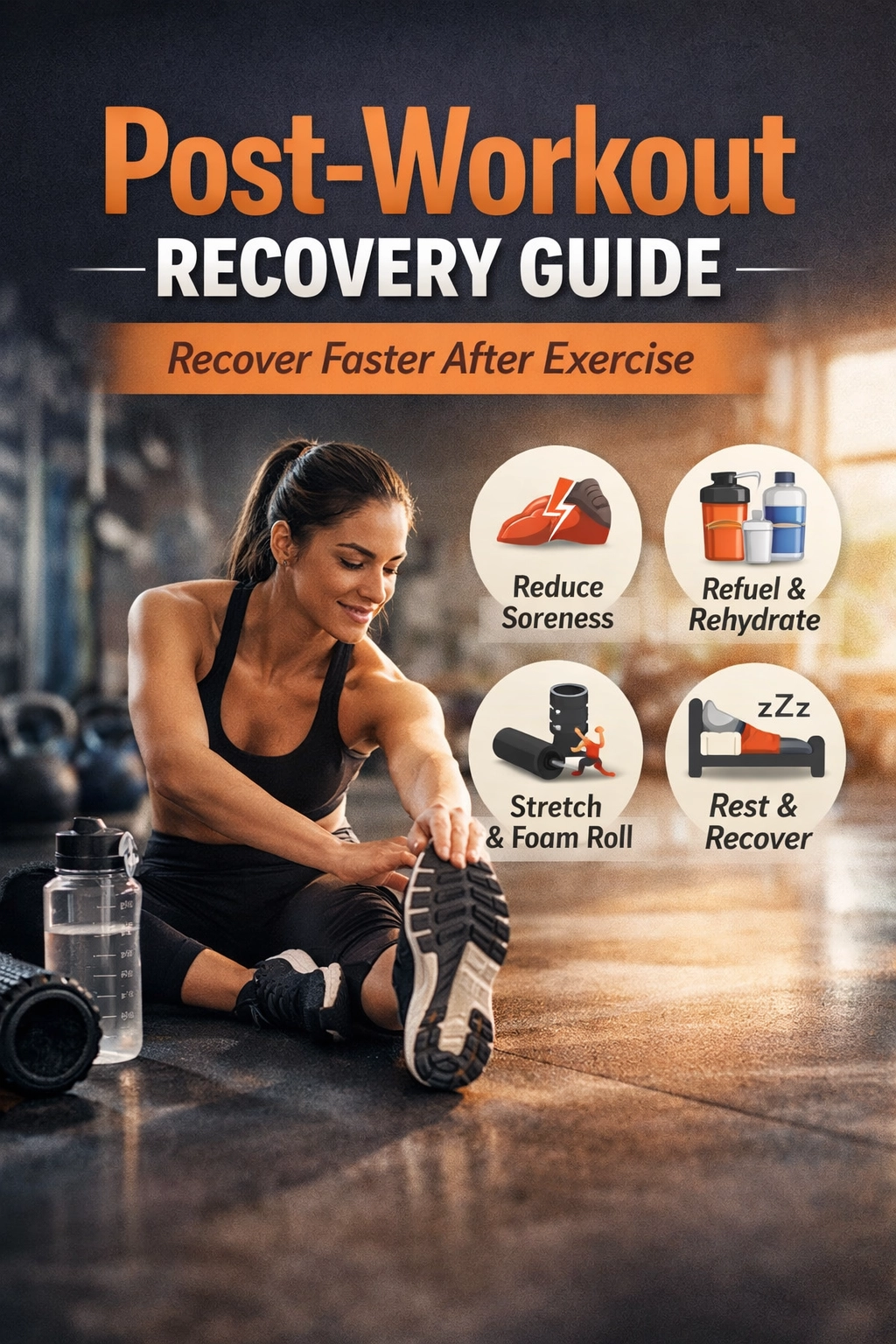
Post-Workout Recovery Guide: How to Recover Faster After Exercise
If you want better results from your workouts, your post-workout recovery routine matters just as much as the workout itself.
Whether you are following a workout routine for beginners, a strength training program, a HIIT session, or a cardio workout, proper recovery helps you:
- Reduce muscle soreness
- Prevent injury
- Build muscle faster
- Improve endurance
- Stay consistent long-term
This complete post-workout recovery guide will show you exactly how to recover faster after exercise using science-backed strategies that work for beginners and experienced fitness enthusiasts alike.
For more fitness strategies, explore our main resource hub: Fitness & Health Guide.
Table of Contents
- Why Post-Workout Recovery Is So Important
- Cool Down Properly After Every Workout
- Stretch to Reduce Muscle Soreness
- Refuel with the Right Post-Workout Nutrition
- Hydration: The Most Overlooked Recovery Tool
- Sleep: The Ultimate Muscle Recovery Booster
- Active Recovery Days
- Foam Rolling for Muscle Soreness Relief
- Cold vs Heat Therapy
- Supplements That Support Recovery
- How Long Should Muscle Recovery Take?
- Sample Beginner Post-Workout Recovery Routine
- Common Recovery Mistakes to Avoid
- Frequently Asked Questions
Why Post-Workout Recovery Is So Important
When you exercise, your muscles experience small microscopic tears. This is completely normal — and it's actually how muscle growth happens. But without proper muscle recovery after a workout, you may experience:
- Excessive soreness
- Fatigue
- Reduced performance
- Increased injury risk
Recovery allows your body to:
- Repair muscle tissue
- Replenish glycogen stores
- Reduce inflammation
- Restore energy levels
If you are just starting out, consider reading our Beginner's Guide to Starting Your Workout Journey to build a balanced fitness plan.
1. Cool Down Properly After Every Workout
Many people skip this step — but it's critical.
Why It Works
- Gradually lower your heart rate
- Prevent dizziness
- Improve circulation
- Begin muscle recovery immediately
Simple 5-Minute Cool-Down Routine
- Slow walking (2 minutes)
- Light dynamic stretching
- Deep breathing exercises
If you are doing cardio workouts for beginners, this step is especially important to stabilise your heart rate.
2. Stretch to Reduce Muscle Soreness
Stretching helps improve flexibility and reduce stiffness after training.
Best Post-Workout Stretches
- Hamstring stretch
- Quad stretch
- Shoulder stretch
- Child's pose
- Cat-cow stretch
Hold each stretch for 20–30 seconds.
Stretching increases blood flow, which helps reduce delayed onset muscle soreness (DOMS).
If flexibility is a goal, pair recovery days with our Beginner Yoga Sequence to improve mobility.
3. Refuel with the Right Post-Workout Nutrition
Nutrition plays a massive role in how to recover faster after exercise.
What Your Body Needs
- Protein (for muscle repair)
- Carbohydrates (to replenish energy)
- Hydration (to prevent fatigue)
Ideal Post-Workout Meal Example
- Grilled chicken or tofu
- Brown rice or quinoa
- Mixed vegetables
- Water or electrolyte drink
If you need help structuring meals, follow our Healthy Meal Planning for Beginners guide.
Protein Target: Aim for 20–30g of protein within 60 minutes post-workout.
You can also estimate your nutrition needs using our Calorie & Macro Calculator.
4. Hydration: The Most Overlooked Recovery Tool
Even mild dehydration slows recovery.
After intense workouts (especially HIIT workouts for beginners), drink:
- 500–750ml of water
- Add electrolytes if sweating heavily
Hydration helps:
- Reduce muscle cramps
- Improve circulation
- Transport nutrients
5. Sleep: The Ultimate Muscle Recovery Booster
If you want to reduce muscle soreness fast, sleep is your secret weapon.
During deep sleep:
- Growth hormone is released
- Muscles repair
- Inflammation decreases
Ideal Target: 7–9 hours per night.
Poor sleep = slower muscle recovery after workouts.
6. Active Recovery Days
Recovery doesn't mean doing nothing.
Active recovery improves blood flow and speeds healing.
Examples
- Light walking
- Gentle yoga
- Swimming
- Mobility drills
If you are following a structured Strength Training Program, schedule at least 1–2 active recovery days per week.
7. Foam Rolling for Muscle Soreness Relief
Foam rolling (self-myofascial release) can reduce tightness and improve flexibility.
Roll slowly over:
- Quads
- Hamstrings
- Calves
- Upper back
Spend 30–60 seconds per muscle group.
This improves circulation and may reduce muscle stiffness after exercise.
8. Cold vs Heat Therapy: What Works?
Cold Therapy (Ice or Cold Shower)
Best for:
- Reducing inflammation
- Post-HIIT or intense strength training
Heat Therapy
Best for:
- Relaxing tight muscles
- Improving mobility
Both can help depending on workout intensity.
9. Supplements That Support Recovery (Optional)
If your diet is balanced, supplements may not be necessary — but some can support recovery:
- Whey or plant-based protein
- Magnesium
- Omega-3
- Creatine (for strength training)
Always prioritise whole foods first.
10. How Long Should Muscle Recovery Take?
For beginners:
- Light workouts → 24 hours recovery
- Intense workouts → 48 hours recovery
If soreness lasts longer than 72 hours, you may be overtraining.
Listen to your body.
Sample Beginner Post-Workout Recovery Routine
Here's a simple routine to follow after every session:
- 5-minute cool-down
- 5 minutes of stretching
- Protein + carbs meal within 1 hour
- Drink water throughout the day
- 7–9 hours of sleep
- Light movement the next day
You can also identify your ideal training routine using our Personalised Fitness Quiz.
Consistency with this routine will dramatically improve results from your workouts.
Common Recovery Mistakes to Avoid
- Skipping cool-down
- Not eating enough protein
- Poor hydration
- Training the same muscle group daily
- Ignoring sleep
Recovery is part of progress — not a break from it.
Frequently Asked Questions
How can I recover faster after a workout?
Hydrate, eat protein and carbs, stretch, foam roll, and sleep at least 7 hours.
Does soreness mean a good workout?
Not necessarily. Mild soreness is normal, but extreme soreness can indicate overtraining.
Should beginners take rest days?
Yes. At least 1–2 rest or active recovery days per week are recommended.
What is the best post-workout meal?
A combination of protein and carbohydrates within 60 minutes of exercise.
Final Thoughts: Recovery Builds Results
Your workouts stimulate progress — but recovery is where progress actually happens.
By following this complete post-workout recovery guide, you'll:
- Reduce muscle soreness
- Improve muscle growth
- Prevent injury
- Increase energy
- Stay consistent
For more fitness strategies, training plans, and wellness advice, visit our Fitness & Health pillar page.



