

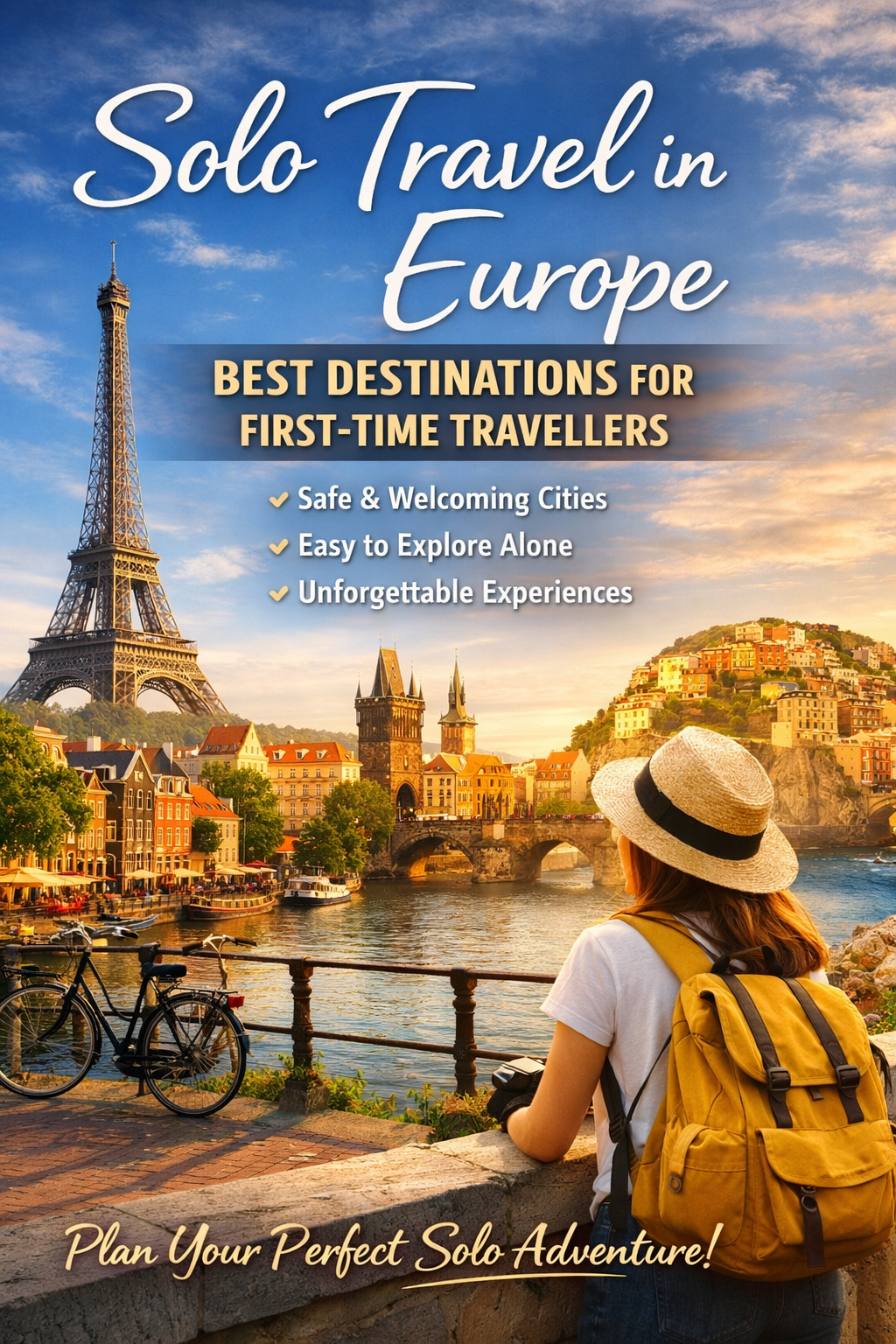
What makes a city suitable for a first solo trip?
No destination is risk-free or equally suitable for every traveller. Consider the whole journey, including airport transfers, neighbourhood choice, late arrival times, accessibility, local laws and how comfortable you feel navigating in another language.
Use the practical trip-planning guide to organise documents, accommodation, transport and a flexible itinerary.
Compare seven beginner-friendly European cities
| City | Good fit for | Plan carefully |
|---|---|---|
| Lisbon | Viewpoints, cafés and day trips | Steep streets, trams and seasonal prices |
| Amsterdam | Museums and organised transport | Bicycles, busy centre and accommodation costs |
| Dublin | English-speaking city break and live culture | Accommodation prices and late-night areas |
| Barcelona | Architecture, food and coast | Petty theft and crowded visitor areas |
| Prague | Compact historic centre and walking | Tourist pricing and busy central routes |
| Florence | Art, food and slower exploration | Advance museum booking and summer crowds |
| Copenhagen | Design, waterfronts and easy transit | Higher everyday costs and cycle lanes |
“Beginner-friendly” describes practical characteristics, not a guarantee of safety or affordability. Your dates, neighbourhood, identity, mobility and planned activities can change the experience substantially.
1. Lisbon, Portugal
Best for relaxed exploring and day tripsLisbon combines historic neighbourhoods, viewpoints, cafés and rail connections to Sintra and Cascais. It can work well for travellers who want an active city break without planning every hour.
Ideas for a solo itinerary
- Explore Alfama in daylight and stop at established viewpoints.
- Take a guided food or history walk early in the trip.
- Use the train for a planned day trip to Sintra or Cascais.
Plan carefully: Lisbon is hilly, pavements can be uneven and trams become crowded. Check accommodation access and remain alert to petty theft in busy visitor areas.
2. Amsterdam, Netherlands
Best for museums and straightforward public transportAmsterdam offers a dense network of trams, trains and metro services alongside museums and canal-side walking routes. It suits travellers who prefer scheduled cultural activities with flexible time between them.
Ideas for a solo itinerary
- Reserve major museum tickets before travelling.
- Choose a daytime canal cruise or small-group walking tour.
- Explore a neighbourhood beyond the busiest central streets.
Plan carefully: Cycle lanes are busy and easy to mistake for pavements. Look both ways before crossing and compare accommodation costs and locations carefully.
3. Dublin, Ireland
Best for an English-speaking first city breakDublin can reduce the language barrier for readers travelling from Ireland or the UK. Its literary attractions, museums, coastal rail trips and organised tours provide plenty of activities that work independently.
Ideas for a solo itinerary
- Combine a museum or historic site with a central walking route.
- Take the DART to Howth or another coastal stop during daylight.
- Choose an organised music or history experience rather than relying only on nightlife.
For a shorter trip close to home, explore these weekend getaways in Ireland and England.
Plan carefully: Central accommodation can be expensive, particularly around events. Compare transport home after evening plans and avoid assuming familiarity removes ordinary city risks.
4. Barcelona, Spain
Best for architecture, food and a city-and-coast mixBarcelona offers distinctive architecture, markets, museums and beaches connected by an extensive public-transport network. It suits travellers who enjoy a busy city with varied daytime activities.
Ideas for a solo itinerary
- Book timed entry for a major Gaudí site.
- Join a small-group food or neighbourhood tour.
- Plan a daytime waterfront walk and a separate historic-centre route.
For a quieter extension, see the Southern Spain hidden-gems guide.
Plan carefully: Pickpocketing and distraction theft are recognised concerns in crowded visitor areas and on public transport. Keep valuables secured and check current official advice.
5. Prague, Czechia
Best for a compact historic centrePrague’s central landmarks are relatively close together, making it possible to create a simple walking itinerary supported by trams and metro services. Early starts can provide a calmer experience at popular sites.
Ideas for a solo itinerary
- Visit Charles Bridge early and continue towards the castle area.
- Use a reputable guided walk to understand the historic centre.
- Schedule a café or riverside break between major sights.
Plan carefully: Check menus, exchange rates and payment screens before confirming a purchase. Use recognised transport and official ticket channels.
6. Florence, Italy
Best for art, food and slower travelFlorence rewards travellers who prefer a smaller number of substantial cultural experiences. Much of the historic centre can be explored on foot, with museums, churches, markets and organised Tuscan day trips.
Ideas for a solo itinerary
- Reserve the Uffizi or another major museum in advance.
- Join a cooking class or small-group food walk.
- Allow an unhurried morning for one neighbourhood or viewpoint.
Continue planning with the guide to Italy’s lesser-known destinations.
Plan carefully: Summer heat, crowds and timed-entry demand can affect the itinerary. Confirm opening times and avoid packing too many major sites into one day.
7. Copenhagen, Denmark
Best for design, waterfront walks and organised transitCopenhagen offers metro connections, museums, harbour areas and cafés where spending time alone feels ordinary. It can suit travellers who value clear infrastructure and a calmer pace.
Ideas for a solo itinerary
- Combine a central design or history attraction with a waterfront route.
- Use the metro for longer journeys and walk compact central areas.
- Choose one pre-booked group activity if you would like social contact.
Plan carefully: Food, attractions and accommodation may cost more than in some other cities on this list. Set a daily budget and pay close attention to cycle lanes.
First-time solo travel planning checklist
- Choose accommodation with recent reviews, a clear check-in process and a route you would be comfortable using after dark.
- Plan the airport or station transfer before departure, including a late-arrival alternative.
- Keep digital and offline copies of bookings, insurance and emergency contacts.
- Share your basic itinerary with a trusted person and agree when you will check in.
- Keep payment methods and important documents in more than one secure place.
- Download an offline map and the official local transport application where available.
- Book suitable travel insurance as soon as practical after booking the trip.
- Leave room in the itinerary for rest, weather changes and altered transport.
Is solo travel in Europe safe?
Safety varies between countries, cities, neighbourhoods, seasons and individual circumstances. Avoid treating a favourable reputation or ranking as a guarantee. Research the exact destination, current events, local laws, transport risks and advice relevant to your identity and planned activities.
Common precautions include securing valuables, avoiding isolated routes late at night, limiting alcohol when you are responsible for getting yourself home, using recognised transport, and leaving any situation that feels wrong. In an emergency within the EU, the common emergency number is 112.
Official travel checks for Ireland and the UK
Check the guidance that applies to your citizenship and destination shortly before travelling.
Choose the city that fits your first trip
Shortlist two destinations, compare real costs for your dates and check how you would travel from the airport to suitable accommodation. A manageable plan is more valuable than the longest possible itinerary.
Explore More Travel GuidesContinue planning your European trip
Solo travel in Europe questions
Which European city is best for a first solo trip?
There is no universal best choice. Compare arrival transport, accommodation location, daily costs, independent activities and current official advice. Dublin may reduce the language barrier, while Amsterdam and Copenhagen offer particularly organised transport.
How many days should my first solo trip be?
A three- to five-night city break can provide enough time to learn the routine without creating an overcomplicated itinerary. Choose a duration that fits your budget, confidence and travel time.
How can I meet people while travelling alone?
Book a reputable walking tour, cooking class, day trip or small-group activity. Choose social contact deliberately while keeping control of your accommodation, transport and return plans.
What should I check immediately before travelling?
Review official country advice, entry requirements, transport disruption, weather, insurance cover, accommodation instructions and emergency contacts. Repeat these checks because conditions can change after booking.
Travel information is general and may change. Confirm entry requirements, safety advice, accessibility, prices and insurance directly with official authorities and providers before booking or travelling.
