
By Lifestyle Hub Today
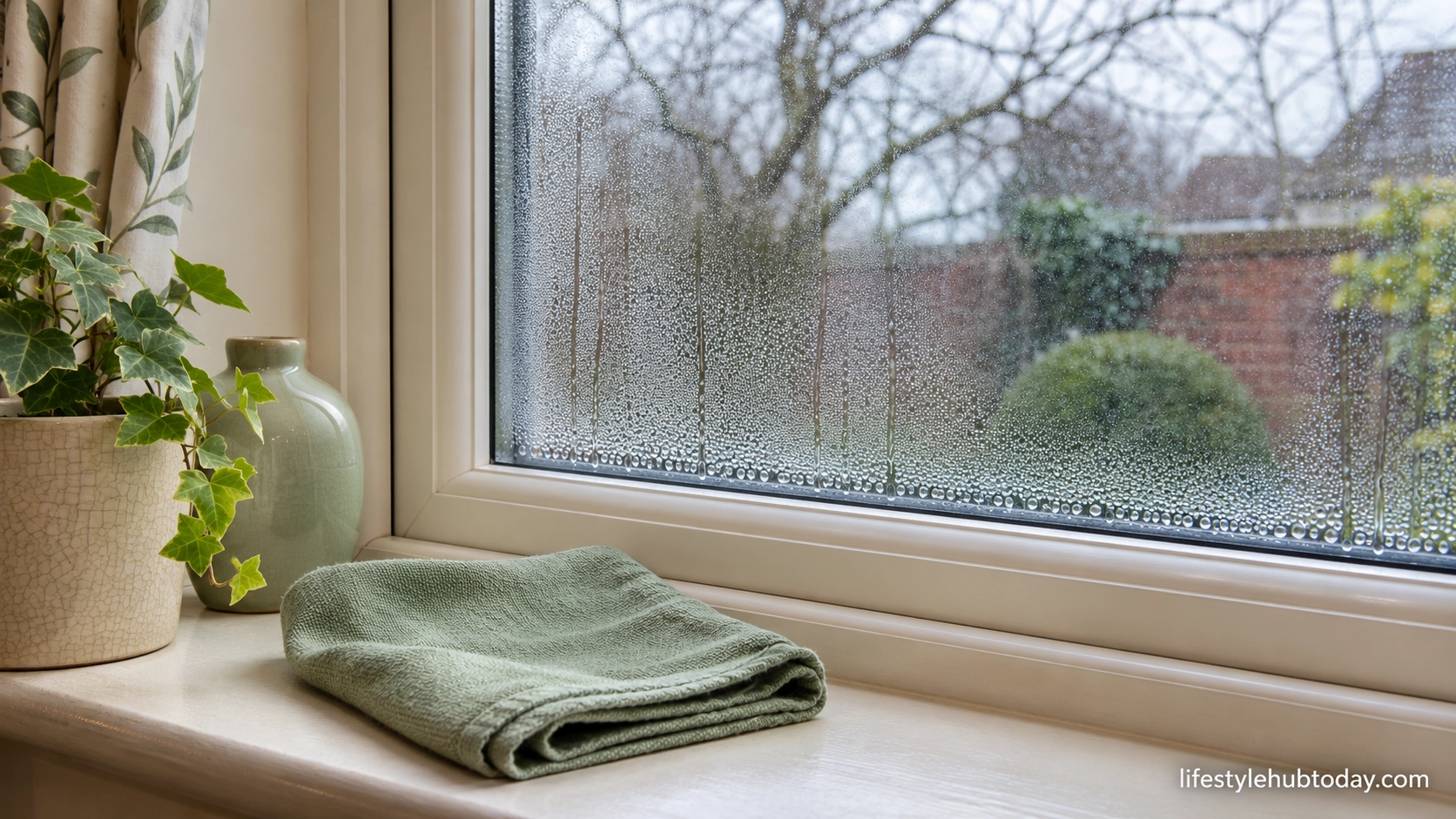
Water on the bedroom window first thing in the morning is a familiar sight in winter. Start by checking where the moisture sits. Droplets you can wipe off the room side of the glass, fog trapped between the panes and a wet patch beside the frame each call for a different next step.
Start here: Dry the glass and sill, use your existing ventilation during and after cooking or showering, and check whether the moisture returns. Photograph recurring damp patches or mould and arrange for the cause to be investigated.
Where is the moisture?
| What you see | What to check or do |
|---|---|
| Droplets on the room side | Moist indoor air can condense on cold glass. Dry the sill and check nearby sources of moisture, airflow and how cold the room gets. |
| Mist between panes | If moisture stays visible inside double glazing after the accessible surfaces are dry, the glazing seal may have failed. Ask a window professional or your landlord to inspect it. |
| Moisture on the outside only | This can occur on the outer pane of efficient glazing in cool, still weather. If water is entering the room or the frame stays wet, report that separately. |
| Damp around the frame or on the wall | Note whether it worsens after rain or appears alongside staining, peeling paint or mould. Arrange an inspection for recurring damp. Several causes can look similar. |
Reduce moisture where it starts
- After a shower: Close the bathroom door and use the extractor if fitted. If you rely on a window, open it briefly where it is safe to do so.
- When cooking: Put lids on pans and use an extractor that vents outdoors if available. Keep the kitchen door closed where practical so steam stays near the point of extraction.
- When drying washing: Dry outside when conditions allow. If you need to dry indoors, use an airer in a room you can ventilate, space out the clothes and avoid draping wet washing over radiators.
- In bedrooms: Keep existing trickle vents clear, open curtains in the morning and allow air to circulate behind large furniture against exterior walls.
Cold rooms make it easier for moisture to collect on glass. If heating costs are a concern, use our winter guide to reducing energy bills in Ireland and England to review heating controls and household costs. Keep permanent ventilation clear when making draughtproofing changes.
A quick morning window check
- Open the curtains and see exactly where the water is sitting.
- Wipe the inside glass and sill dry with a cloth. Hang the cloth somewhere it can dry with airflow.
- Check that vents are clear and air the room briefly if safe and practical.
- Make a note if the same spot keeps getting wet, especially after rain.
For a regular reminder to check the rooms where moisture keeps returning, add it to your weekly Sunday reset checklist.
When to report recurring damp
If you notice mould, repeated damp patches, water entering at the frame or damp spreading beyond the window, arrange for the cause to be checked. If you rent, tell your landlord, letting agent or housing provider promptly in writing. Include clear photos, dates, the rooms affected and whether the problem worsens after rain. Ask for an inspection and keep a record of replies. If you own the property, ask a qualified professional to investigate repeated damp or suspected leaks.
