
How to Build a Timeless Wardrobe: Quality, Fit and Cost Per Wear
A timeless wardrobe is not a prescribed list of beige basics. It is a useful collection of clothes that fit your body, suit your real life and earn their place through repeated wear. This practical guide shows you how to choose well—without chasing every trend or assuming a higher price always means better quality.
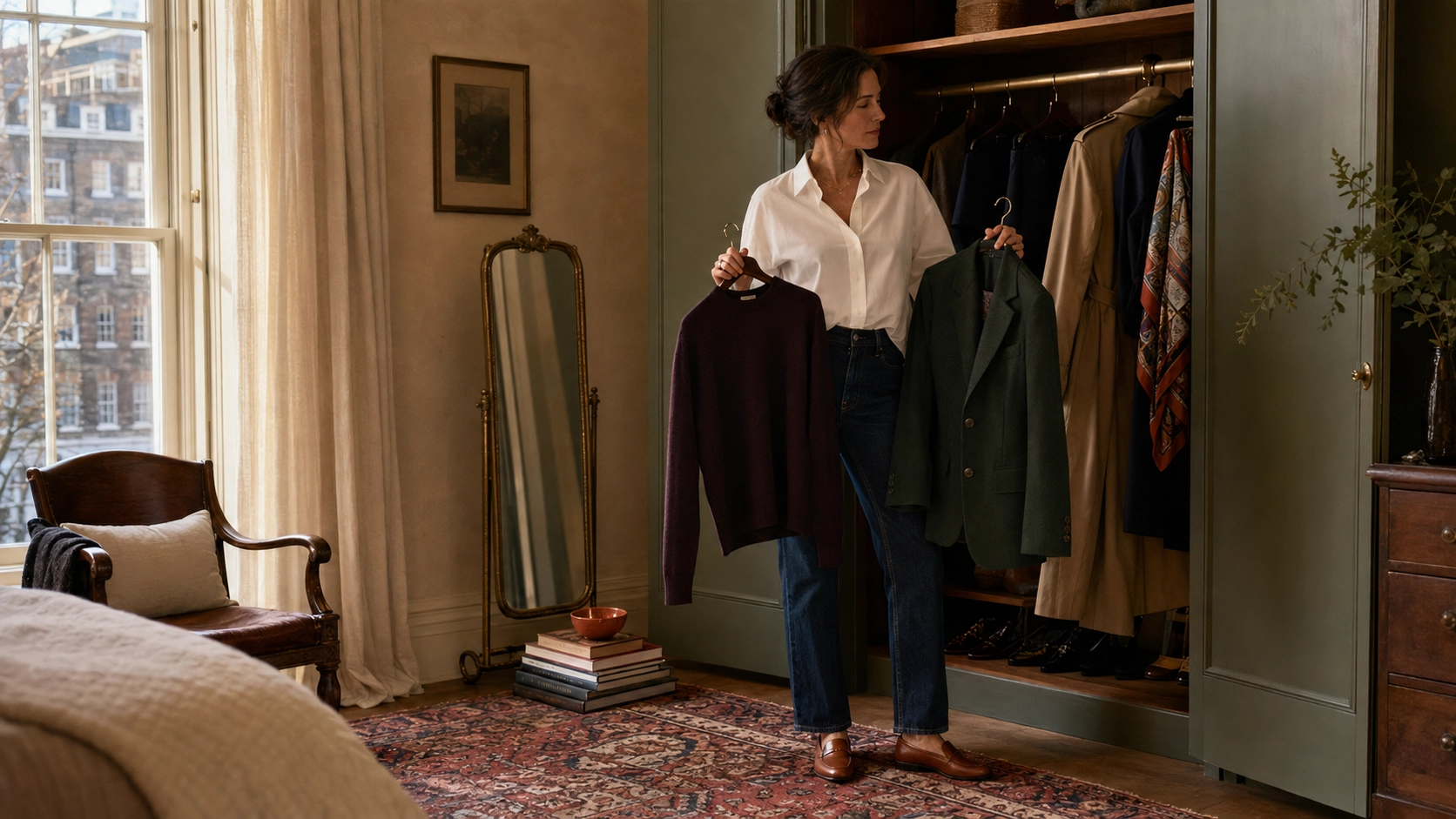
What makes a wardrobe timeless?
“Timeless” does not mean trend-free, expensive or minimalist. It means your clothes remain useful beyond one brief moment. A timeless piece usually has four qualities: you feel comfortable in it, it works with several things you own, it suits more than one situation and it can withstand the way you genuinely wash and wear clothes.
A garment earns longevity only when you wear it. Begin with your habits, not an idealised version of your life.
Personal
It reflects your taste rather than somebody else’s list of “must-haves”.
Practical
It fits your climate, routines, comfort needs and dress codes.
Compatible
It creates several outfits with pieces already in your wardrobe.
Maintainable
You can realistically clean, store, repair and continue wearing it.
Build for the life you actually live
Before shopping, look at a typical fortnight. How many days involve work, home, exercise, errands, social occasions or formal events? Your wardrobe should broadly reflect that balance. If most of your week is casual, buying another event dress will not solve an everyday outfit gap.
- Record what you wear for seven days.
Note the outfit, weather, activity and whether you felt comfortable. - Identify repeats.
Your favourite silhouettes, colours and layers are useful evidence—not a lack of imagination. - Find friction.
Notice clothes that ride up, crease badly, require special underwear or only work with one pair of shoes. - Name genuine gaps.
Describe the function before the item: “a washable layer for cool offices” is more useful than “a new jacket”.
For a ready-made foundation list, use the 15-piece capsule closet guide. This article helps you judge which version of each piece deserves a place in your wardrobe.
How to tell whether clothes fit properly
The number on a label is only a starting point. Sizing varies between brands and even between garments from the same retailer. Judge fit through movement, balance and comfort.
- Shoulder seams sit close to your natural shoulder unless the design is deliberately dropped.
- Buttons and zips close smoothly without pulling, rippling or gaping.
- Waistbands stay in place when you sit, bend and walk.
- Sleeves and trouser hems work with the shoes and layers you normally wear.
- Pockets lie flat and do not distort the surrounding fabric.
- You can raise your arms, sit down and take a full stride comfortably.
- The garment hangs cleanly rather than twisting towards one side.
Minor alterations—such as adjusting a hem or waist—can turn an almost-right garment into a frequently worn one. Major changes to shoulders, rise or overall proportion are often less economical.
A practical clothing quality check
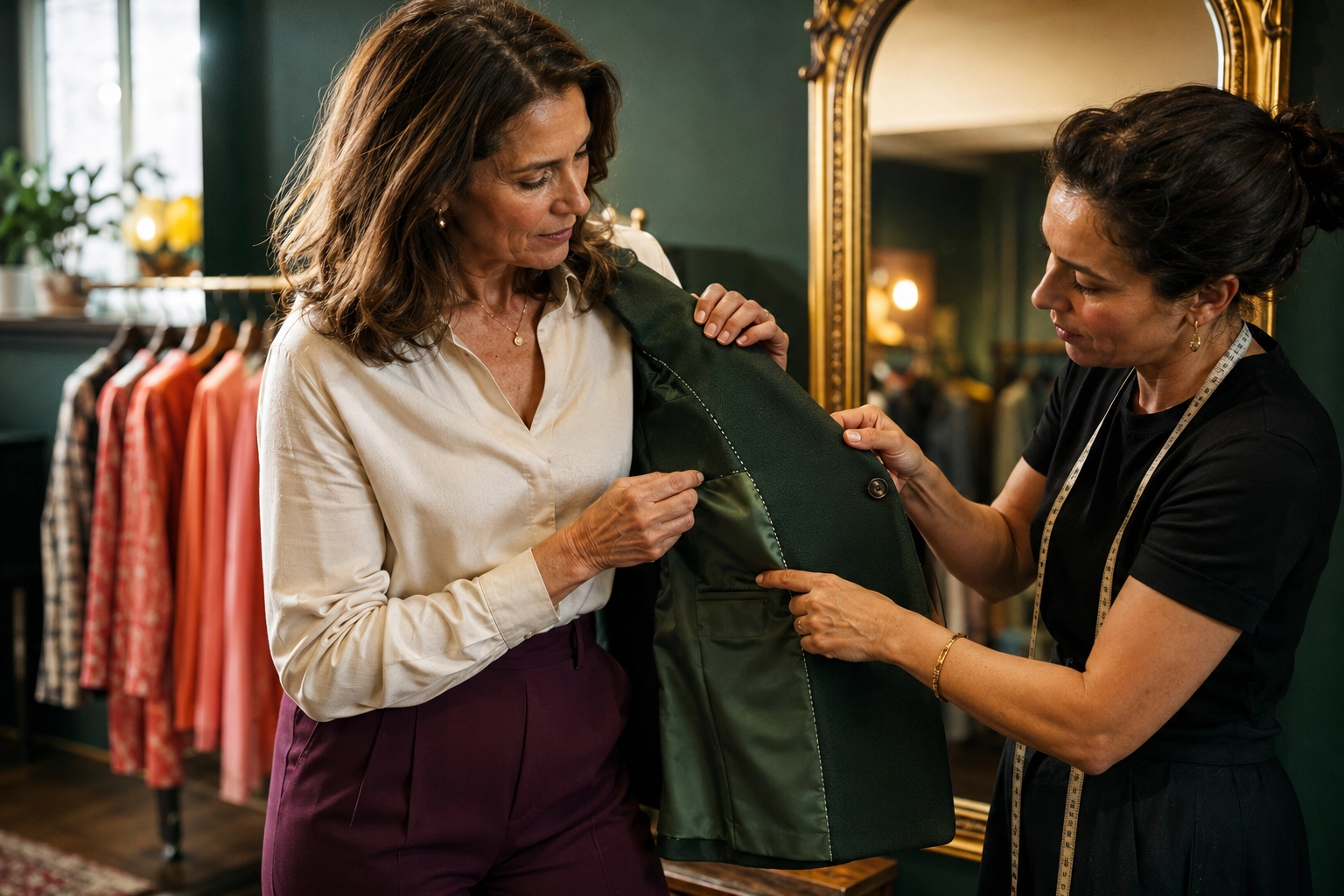
WRAP and the Leeds Institute of Textiles and Colour reported no simple correlation between a T-shirt’s price and its physical durability. Price can reflect design, branding, production, retail costs or materials, but it is not proof that a garment will last. Inspect the piece itself.
| Check | What to look for | Possible warning sign |
|---|---|---|
| Seams | Even stitching, secure joins and no missed stitches | Loose threads, puckering or gaps when gently stretched |
| Pattern | Stripes or checks align where practical at prominent seams | Obvious mismatch across the front or side |
| Fastenings | Smooth zip, firmly attached buttons and reinforced stress points | Snagging zip, loose buttons or stretched buttonholes |
| Fabric recovery | Material returns towards its original shape after a gentle stretch | Immediate sagging, rippling or a stretched-out patch |
| Transparency | Opacity appropriate for the intended garment | Unexpected sheerness that limits how you can wear it |
| Inside finish | Comfortable seam allowances and neat lining where needed | Scratchy edges, exposed elastic or fragile-looking joins |
No single sign guarantees longevity. Construction, fabric, care and frequency of wear work together.
Choose fabric for function—not fibre mythology
Natural fibres are not automatically superior, and synthetic fibres are not automatically poor quality. Cotton can feel breathable but may crease or shrink. Wool can regulate temperature but may require gentler care. Polyester can add durability and easy care, while some versions retain odour or feel less breathable. Elastane can improve comfort and recovery, although too much may affect longevity.
Read the full label
Check fibre percentages, lining, care instructions and whether the garment requires dry cleaning. A beautiful item with unrealistic care needs may remain unworn.
Match fabric to purpose
Prioritise breathability for warm-weather layers, recovery for fitted pieces, insulation for winter and abrasion resistance for hard-working clothes.
Use touch carefully
Softness can be appealing, but finishes may change after washing. Look at density, structure and how the fabric returns after gentle handling.
Plan for care
Follow the label, wash only when needed, use cooler cycles where suitable and air-dry when practical. Correct care can extend useful life.
Useful garment-care essentials
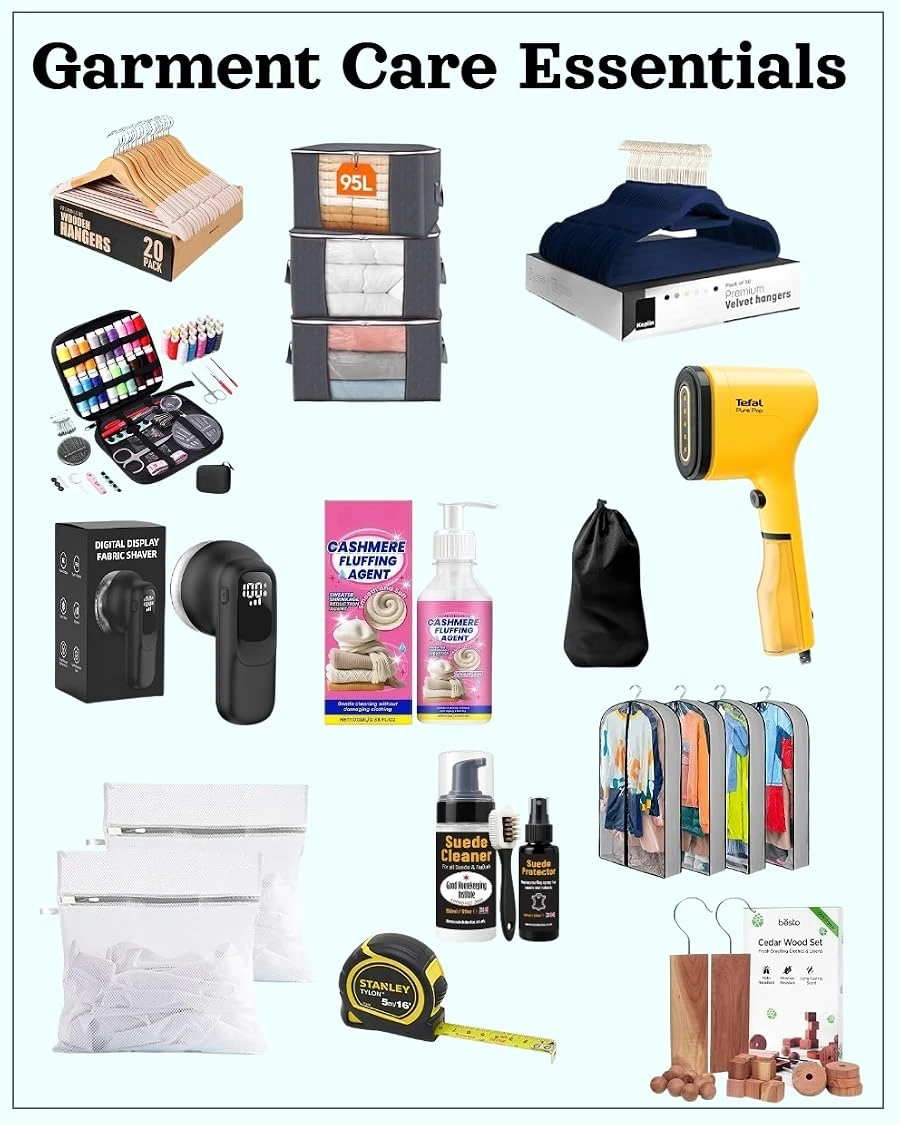 Shop the “Wear It for Longer” garment-care collection on Amazon UK →
Help favourite clothes keep their shape and finish
A small care kit can make routine maintenance easier. Choose only the tools that suit the fabrics and clothes you actually own.
- A fabric shaver or wool comb for suitable knitwear
- A clothes steamer for refreshing and releasing creases
- Delicates bags and appropriate garment wash
- A basic sewing kit for buttons and small repairs
- Shoe-care tools and breathable storage where needed
Always test care tools discreetly and follow the garment label. Not every method is suitable for every fibre or finish.
Breathable clothes-storage bags
Foldable Lifewit storage bags with reinforced handles and clear windows for seasonal clothes or bedding.
View storage bags →Fabric-care tool
A practical option from the garment-care collection for maintaining frequently worn clothes.
View fabric-care tool →Tefal handheld clothes steamer
A compact steamer designed for refreshing garments and releasing everyday creases without an ironing board.
View clothes steamer →Additional garment-care essential
Another practical care option selected to support routine clothing maintenance.
View garment-care item →Stanley tape measure
A durable 5-metre tape measure for checking garment, wardrobe and storage dimensions.
View tape measure →JUNING compact sewing kit
A portable set with thread, needles, scissors and useful accessories for buttons and basic clothing repairs.
View sewing kit →Product availability, specifications and prices can change. Check the current details on Amazon before purchasing.
Test whether a piece will work hard enough
Before buying, create at least three complete outfits using clothes and shoes you already own. Photograph or write them down. The outfits should suit real situations—not three minor variations of the same imaginary occasion.
Versatility does not require every item to be neutral. A plum knit, patterned scarf or colourful coat can be highly wearable when its colours repeat elsewhere in your wardrobe. Use current trends as optional accents, then return to your own palette and silhouettes.
Explore smart layering for changing weather and ways to elevate simple outfits with accessories.
How to calculate cost per wear
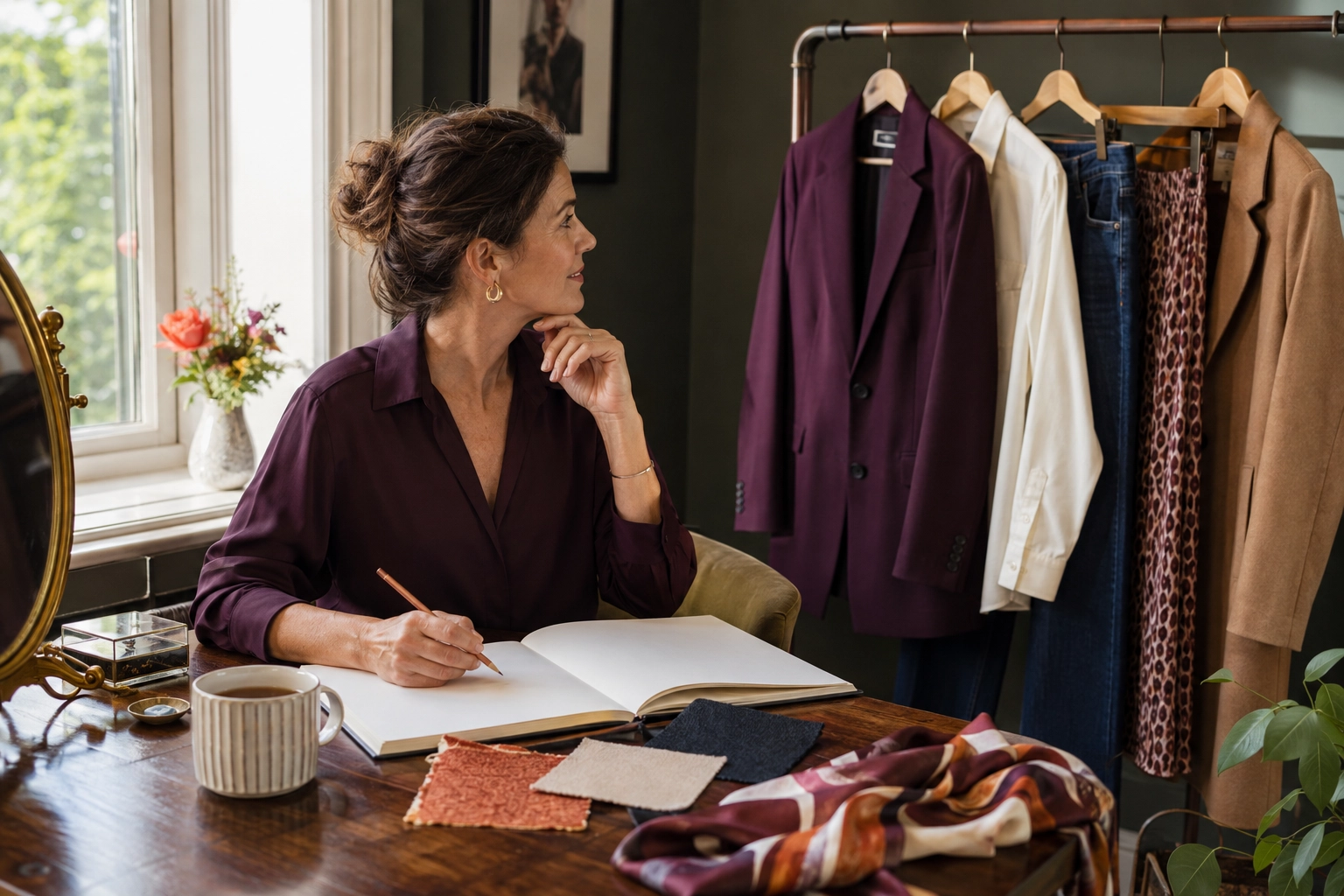
Cost per wear is a simple way to compare an item’s price with its likely usefulness. It is not a perfect sustainability measure, and future wear is always an estimate, but it can interrupt impulse buying and reveal where paying more may—or may not—make sense.
For a more honest estimate, use a conservative number of wears and include foreseeable alteration, cleaning or repair costs:
Build your timeless wardrobe in five steps
- Keep the proven favourites.
These reveal the shapes, colours, fabrics and outfit formulas that already work. - Repair and adjust before replacing.
A new zip, hem, button or simple alteration may return a useful piece to regular rotation. - Fill functional gaps slowly.
Maintain a short list and wait until you find a piece that passes your fit, quality and versatility checks. - Add personality deliberately.
Use colour, texture, jewellery, footwear and trends to make dependable foundations feel like you. - Review by wear, not by season alone.
Notice what you used, what you avoided and why. Let evidence guide the next decision.
Second-hand shopping can expand your options and budget, while repair can displace some new purchases. Whether an item is new or pre-owned, the same rule applies: buy for repeated, realistic wear.
The 60-second pre-purchase check
- Does it fill a specific gap rather than duplicate something I own?
- Can I move comfortably in it?
- Can I make three real outfits with my current wardrobe?
- Have I checked the seams, fastenings, fabric and care label?
- Will I realistically follow the care instructions?
- Would I still want it without the sale price, trend label or influencer styling?
- Can I afford it without compromising a more important priority?
If several answers are “no”, leaving it behind is not missing out—it is protecting space and budget for something better suited to you.
Timeless wardrobe FAQs
How many clothes should be in a timeless wardrobe?
There is no correct number. Your needs depend on climate, laundry frequency, work, caring responsibilities, activities and personal style. Aim for enough useful options without maintaining more than you can comfortably wear and care for.
Do timeless clothes have to be neutral?
No. Neutral colours can mix easily, but colour and pattern can be timeless within your personal style. Compatibility and repeated wear matter more than a prescribed palette.
Are expensive clothes always better quality?
No. Price alone is not reliable proof of physical durability. Inspect construction, fabric, fastenings, fit and care requirements, then consider how often you are likely to wear the item.
What is a good cost per wear?
There is no universal target. Compare the estimated cost per wear with your budget and similar items you own. Everyday pieces usually have more opportunity to achieve a low cost per wear than occasion wear.
How can I make my current wardrobe feel more stylish?
Start with better outfit combinations rather than more purchases. Adjust proportions, add a purposeful layer, repeat a colour, change the footwear or use one accessory as a focal point.
Sources and further reading
- WRAP and Leeds Institute of Textiles and Colour: T-shirt price and durability study (2025)
- WRAP: Displacement Rates Untangled—repair, resale and rental
- The State of Fashion 2026: value, quality and resale
This is general wardrobe guidance. Durability varies by garment, construction, use and care.
Practical inspiration for real life
Lifestyle Hub Today brings together supportive guides, useful tools and carefully curated recommendations across self-care, personal growth, money, food, fitness, family, travel, fashion and everyday living. Every guide focuses on realistic improvements that fit into everyday life.
Learn more about us →